Showing posts with label Europe. Show all posts

April 22, 2013

Poland: 70 Years Later

by Rebecca Neuwirth

In the end, it’s Agatha who makes it impossible not to hope.

I’m with a JDC Ambassadors delegation at the 70th anniversary commemoration of the Warsaw Ghetto Uprising. At midnight on April 19, in the light of two flames that rise from menorahs on either side of the famed Ghetto monument, Cantor Yaakov Lemmer sings in Yiddish about small boys who steal outside to sell cigarettes, and of a searing loss of innocence. Next to me, a member of our delegation sings quietly along—she remembers the tune from childhood.
A memorial for children at the 
Jewish cemetery in Warsaw.
Children's Memorial in Warsaw Jewish Cemetary

Loss of innocence is an elegant metaphor for the brutal desperation that drove parents to allow their young boys to risk their lives to bring home crumbs. The story of the Warsaw Ghetto is unendingly heinous. At its height, over 400,000 Jews were imprisioned in 1.3 square miles. Starvation and violence killed some 100,000 in the first year, and the Nazis deported almost 300,000 to mass murder in Treblinka. Cruel selections separated mothers and fathers from their children; sadistic and senseless acts were the rule, with human kindness used as a lure for brutality.

But the commemoration of the Warsaw Ghetto Uprising, unlike other forms of Holocaust remembrance, focuses not on atrocities but on courage.

It draws attention to acts of resistance and stubborn humanity, from the courage of small boys to the sharing of crumbs of food, the caring for orphaned children – embodied by the amazing Janusz Korczak, even the creation of culture that persisted in the Ghetto in the face of inhuman conditions. Above all, it focuses on the final armed resistance waged by a few thousand Jews against the impossibly larger, full force of the Nazis, and that ended one month later in total destruction and with only 13 Jews remaining.

August 20, 2012

Campers with Disabilities Rejoice at Szarvas

“I return to Szarvas every year to see my
friends and feel something I cannot feel
anywhere else—happy,” says Henrik Z., 32,
who has Down’s syndrome.
Sourse: JDC Website

All year long Henrik Z., 32, who has Down’s syndrome and lives with his pensioner mother inBudapest, Hungary, looks forward to the most special week of his summer. That’s when he goes to camp Szarvas, where he sees his friends, plays soccer, and celebrates Shabbat with the community he feels closest to.

“I return to Szarvas every year to see my friends and feel something I cannot feel anywhere else—happy,” he says.

Home taught by his father for much of his life, Henrik started to attend a special school for the first time when his dad died about 10 years ago. As he began to socialize with his peers, his teacher recommended that he attend a summer program to maintain his social development and interaction throughout the year. That’s when he learned about the one-week summer program for people with disabilities at the Ronald S. Lauder Foundation/JDC International Summer Camp in Szarvas, Hungary.

April 16, 2012

Scholarships Give Greece’s Jewish Children Second Chance at J-School

JDC’s scholarship initiative for Greek families
facing financial crisis is ensuring children like
Moni can continue to receive a Jewish education.
Photo: JDC Website
Since closing the doors of the family clothing business in Athens for good last year, Rafail, 58 has had to count every Euro. Unable to afford the mortgage or sell the house, he and his wife, Sara were forced to cut spending back to a near halt—including pulling their small children, Lela, 10, and Moni, 6, out of Athens’ Jewish Community School.

As Greece’s sovereign debt crisis turns into a full-fledged domestic economic emergency, the skyrocketing unemployment and small business bankruptcy rates are rattling families throughout the country. Rafail and Sara are among hundreds of families in the Jewish community making heartbreaking decisions just to keep a roof over their children’s heads.

The Greek Jewish community, consisting of some 5,000 Jews, operates synagogues, a Jewish school, a cultural center, and a soup kitchen to aid the most vulnerable members of their community. But with the country’s dire financial situation, the majority of Jewish communal institutions are struggling to stay afloat.

March 27, 2012

Aiding Bulgaria's "New Poor" Families

With no money to replace the decayed wallpaper in
their poorly insolated three-room apartment, Harry
and Yanna allowed the children to simply draw on
the walls to bring cheer to their home.  (JDC Website)
When Isak, 6, Stephany, 11, and Maria, 13, received their first JDC package of winter clothing they embraced the social worker and exclaimed, "These are our first new jeans! We've never had jeans that were our size before."

Their parents, Harry and Yana, choked back tears, unsure how to react to their children's overwhelming joy at receiving a simple article of clothing—something which they were no longer able to materially provide themselves.

A year ago, the economic crisis in Bulgaria took a direct hit on this family. Yana was laid off from her job as an optician. With three children and a blind and bed-ridden elderly mother to care for, she was taking sick leave more often than the other employees. She looked for a job for a year, but given Bulgaria's dire economic situation, she had no success.

Left to survive on Harry's monthly salary of just over $500, the family fell deep into poverty. Their unpaid bills, rising heating costs, and overdue taxes added up to over $8000 in debt. They desperately needed help.

February 29, 2012

To the Rescue: JDC Leads Growing Emergency Relief Effort For Greek Jewish Community

New York, February 28, 2012― As financial conditions worsen for Greek Jews, the American Jewish Joint Distribution Committee (JDC), through the support of the Jewish Federations of North America, is leading a growing group of global partners, including Lauder Foundation and Leichtag Family Foundation, to aid the financially-strapped Jewish community. Suffering under the weight of high unemployment, a loss of income, and new taxes, Jews are out of work and seeking assistance. In response, JDC has advocated for a pan-European and pan-Jewish response and has donated, to date, $330,000 for welfare and school scholarships to the Athens Jewish community, which has been the most hard hit. Additionally, JDC will be holding its European regional Gesher young leadership conference in Thessaloniki to ensure young Greek Jews can participate locally.

February 7, 2012

JDC Responds to Extreme Winter Weather in Europe and Former Soviet Union

New York, February 3, 2012― As a wave of dangerous winter weather continues to grip Eastern Europe and parts of the former Soviet Union, the American Jewish Joint Distribution Committee (JDC) has activated its emergency winter response system to supplement the care it already provides to tens of thousands of Jewish elderly and needy children at this time of year. In addition to the heating fuel, blankets, warm jackets, clothes and boots JDC has provided for 20 winters in the past, JDC staff are currently providing extra heating supplies and food to those who cannot leave home and called to check in on those who need additional medical care in some of the hardest hit areas like the Balkans and Ukraine.

"We've been able to mobilize quickly and respond to this latest deep freeze because emergency protocols are inherent to our historic winter relief program. For these Jews, many of whom have no one else to turn to, we are there to ensure an extra lifeline and much-needed sense of community at this time," said JDC CEO Steven Schwager.

In Bulgaria, temperatures hit record lows and Sophie, an elderly Sofia resident, was found by her JDC social worker in her kitchen - the only room in her small apartment with central heating - fully clothed in a winter hat, a heavy sweater, and gloves. JDC provided Sophie with two electric heaters and will cover her electricity bills for January and February ― costs that would consume 60% of her meager monthly pension. This emergency assistance supplements the daily hot meal and medicines Sophie regularly receives from JDC.

Every year, in addition to winter relief, JDC provides a variety of welfare assistance and Jewish community connections to needy and vulnerable Jews throughout Europe and the former Soviet Union.

January 31, 2012

Hallmark Jewish Renewal in the Heart of Eastern Europe


Discover the new chapter of a two-millennia-old story about Bulgaria, where JDC is helping this once-thriving Jewish community, nearly silenced by war and communism, create a remarkable renaissance.

December 2, 2011

Poland’s Largest Jewish Gathering is Youth Inspired and Volunteer Led

Volunteer-organized Limmud Keshet in Poland
brings together hundreds of Jews young
and old for a weekend of fun and Jewish learning
Anna is a poster child for her community's campaign about Jews in Poland. With a Jewish mother who knew little about her roots (she had no one to learn from) and a non-Jewish father, Judaism was not a part of Anna's family life when she was a child.

But around the time she turned 16 something changed. Her mom met a friend who introduced her to the growing Polish Jewish community, which she was surprised—and very pleased—to discover. Soon she started taking Yiddish classes and coming to events and holidays at the Jewish Community Center. And Anna, excited to connect with her mom and reconnect with their ancestry, came along, too.

Anna joined the Jewish student organization and soon found herself on a Taglit trip to Israel. "For me, that was transformative. I felt grateful for the experience and wanted to do something in the community to show my appreciation," said Anna. "I became a volunteer and started to feel needed and useful. I found the place where I felt at home."

So when JDC brought Limmud—a pluralistic, volunteer-organized learning initiative that's active today in over 50 countries—to Poland four years ago, Anna was among the first to get involved. And it didn't take long for her mother to join her and become a Limmud volunteer herself.

For three years running, Limmud Keszet Poland has been the largest gathering of Polish Jews in the country since the late 1960s. Over 600 participants took part last year and this year the same number of spaces sold out within 24 hours of the event's announcement.

But what makes Limmud Keszet significant is more than just numbers; it is the fact that this volunteer-led event draws Jews of all ages (from 6 months to 90 years old), of all denominations and traditions (from Orthodox to Progressive), and from a variety of linguistic backgrounds (Polish, Hebrew, Yiddish, and English) together for a weekend of fun and learning. In short, there's simply nothing else like it on the Polish-Jewish calendar.

Volunteers organize over 100 lectures and workshops led by world-famous scholars, artists, rabbis, and fellow community members. There is something for everybody: arts and crafts workshops for children, cooking classes, dance lessons, discussions on Jewish philosophy and the Torah. At Limmud, everyone shares his or her areas of expertise with the community.

For Anna, volunteering at Limmud is very special because it connects such an eclectic group of people. "Nowhere else in Poland can you meet so many Jews in one place. Nowhere else will you find everyone—Orthodox, Reform, professors and "beginner Jews"—coming to celebrate Shabbat together."

Monika, the event's organizer, says Limmud is chiefly about "breaking barriers by bringing elements of the entire community together"—something that is particularly hard to do given the history of Polish Jewry, in which barriers often formed important protections but also kept the community fragmented. "Limmud is our ideal vision of what we as a Jewish community would like to be: united and sharing in the joys of practicing and learning about our tradition…and planning for a better future."

Through events like Limmud, young Jews from across Poland are getting involved and ensuring the focus of Jewish life in their country remains modern and forward-looking. Anna, who is a Jewish professional today, is proud to play an active role in her community's growth and evolution. "My peers are choosing to raise their children Jewish. That's already a step that will pay off in the future!"

October 7, 2011

Jewish Camping Builds Community across Europe and FSU

 To view the full slideshow of photos from JDC sponsored summer activities in Europe and the FSU, please check out this link. 

Svetlana is raising her little girl Natalia, age 5, alone in a tiny two-room home that has no running water or indoor plumbing, and nothing but an oven to keep them warm in the cold Belarussian winters. Supporting her daughter on a cleaner’s monthly salary of $88 would be excruciatingly difficult under any circumstances; but Natalia’s needs as an epileptic, who also suffers from frequent sinus trouble and adenoid infections, make it impossible.

JDC provides the family with vital help such as heating wood for the winter, and clothing, shoes, and school supplies for Natalia in the fall. But what they both look forward to most of all is summertime, when they can take a break from the harsh reality of their daily lives to attend a JDC Shabbaton for families with children with special needs.

Like thousands of children and parents across Europe and the former Soviet Union, Svetlana and Natalia are thrilled to participate in one of the myriad JDC Jewish camping programs that have been bringing together Jews throughout the region for over 20 years. Active in every season and for every age group—whether regional summer “sleepaways” or day camps for kids; year-round family shabbatons, weekend retreats, or intergenerational camps; madrichim (counselor) training sessions for young leaders; or golden age camps for seniors—these experiences often serve as a powerful entree into Jewish life and a welcome reprieve for those with challenging personal situations like Natalia and Svetlana’s.

This year nearly 15,000 children and adults will participate in JDC’s camp programs, which will include over 130 camps in 20 countries across Central and Eastern Europe and the former Soviet Union.

“Thank you for the well organized event, the attention you gave to our children, the rest for us parents, and the great meals,” wrote Svetlana after participating in a recent Minsk Shabbaton. “We are grateful for the opportunity to participate in such an experience and wish JDC prosperity, success, and the possibility to organize such events in the future.”

August 25, 2011

Reviving Baltic Jewish Communities One Camper at a Time

Irina with eleven-year-old Agata from Latvia,
who has been attending Olameinu summer camp
since age five with assistance from JDC's children
in need program
Photo: JDC website
The great history of the Baltic region as a center of Jewish learning and culture – nearly destroyed by the Holocaust and decades of communist repression – is finding expression once again, with JDC support, in the reemerging Jewish communities of Lithuania, Latvia, and Estonia. Nowhere is this more apparent than at the thriving Olameinu regional Baltic summer camp, where hundreds of Jewish children of all ages eagerly embrace Jewish knowledge and tradition each year.

The personal journey of Irina O., the camp’s 26-year-old director, mirrors the renewal of Jewish life in the Baltics over the past 20 years. Today all Olameinu camps are staffed completely by directors, teachers, and madrichim (counselors) from the local Jewish community. Here’s what Irina had to share about the camp – and about building the new Jewish generation in the Baltics.

Q: Olameinu, now in its 10th year, connects young Jews with one another and with their heritage, building a strong community foundation. When does camp start and how many kids will participate?

A: So far we have 180 registered for Olameinu’s end of July session for kids ages 7-12 in Estonia. In August we expect 180 teens (ages 13-17) for the session in Lithuania and 160 students, ages 18-35, in Latvia.

Also, we have a group of 55 kids from the Baltics leaving for the Ronald S. Lauder Foundation/JDC International Summer Camp at Szarvas, Hungary.

Q: That’s a lot of children getting involved in Jewish life through camping. What was your first exposure to Judaism?

A: My Jewish journey began when I was 12 years old and my parents enrolled me in the Jewish school in Riga, where I completed 6th through 12th grade. Prior to that I knew was that I was Jewish and my mother’s parents lived in Israel (they moved there in 1995) but I didn’t grow up with Jewish traditions in my home because I was from a mixed family – a Jewish mother and Ukrainian father.

Starting Jewish school was really inspiring and changed my life! I started bringing my parents to school for all the Jewish holidays and to synagogue. My parents were happy to go because they figured if it brings the family together, why not?

Q: When did you first get involved in your Jewish community?

A: While still in school I started to volunteer as a leader and was quite successful. I’d never had the experience of being a kid at camp so when I turned 18 I went to Szarvas. I was so impressed that I sought out additional development, including the JDC-supported Kadima (Baltic madrich trainings at the Kadima School for Counselors), then Szarvas madrich training, and the regional Baltics madrich seminars.

Nine years ago I started as a madricha and then became an Olameinu coordinator. Today I’m the Olameinu camp Director and the Youth Program Director in Riga, Latvia.

Q: Your growth as a leader seems to reflect the expansion of programs for youth throughout the Baltics and even the maturity of the Jewish community in the region. What is Riga’s Jewish community like today?

A: I’ve been involved in the Jewish community professionally for eight years and I’ve seen it progress from a variety of disconnected programs to a united organization with common goals and bright leadership. I’ve seen it grow from a small community to a big, vibrant one.

For example, five years ago we had youth programs, elderly programs, programs for children, etc. Now we are all together and it is very nice to be part of something bigger, all under one roof.

Q: What is the balance between JDC’s stewardship and your community’s input into the programs you work on?

A: My team and I work all year long, creating programs for different ages. I coordinate all the youth programs (which covers a big age range, from two to 45!) We have weekly and monthly Jewish cultural programs … for small kids, families, teenagers ... and all are supported by JDC.

Both the community and JDC support our program development. They support our ideas, we jointly come up with the program goals, and then our local staff implements the programs. It’s a very good balance.

Q: With members of the community like you taking the leading role in driving the programs, is there a strong emphasis on developing young leadership to carry the torch in the future?

A: Yes, leadership development is very critical for our community.

When it comes to camping, we have many madrichim that start out in local clubs and local communities and then go on to Olameinu and Szarvas. (We also have kids that go to Szarvas and come back to be madrichim at our camp.) What’s great is that the youngsters feel that they can really contribute, participate, and fully express their ideas at our local camp. This is where they shine and I want to encourage that in every way. I see developing young Jewish leaders as a very important part of the camp that I am running.

Q: What are some of the programs that you are excited about this summer?

A: I’m excited about all of the programs because every single year I try to bring something new into the camps. This time, for example, it will be special for the kids to sing real Israeli songs with our singer from Israel and to learn Israeli rikudim from a dancer we’ve invited from Bulgaria.

This is also the first year that I am leading two of the sessions, so it is a new personal challenge for me. I am very excited about the theme that we chose: the Ten Commandments. Throughout the sessions kids will have a chance to learn about this theme and explore it through arts and crafts, workshops, games, and study sessions with their madrichim.

All in all, I feel very lucky because I get real pleasure from my work, especially when I see the kids smiling, feeling Jewish and joyous. That’s better for me than anything.

May 31, 2011

Employment Center in Latvia Saves Struggling Family

Ariel Job Center professionals helped Oleg
build his resume, skill set, and self-confidence
to interview successfully.
Photo: JDC website
When Oleg was told that the warehouse where he’d been working for 13 years was bankrupt and closing its doors, he felt the air being wrenched from his chest. He had seen many people lose their jobs in Latvia’s economic crisis, but never thought that it would happen to him; his company had been stable for decades. No matter how desperately Oleg tried to remain calm about his future, all he could picture was the disappointment he’d see in his son Eitan’s eyes. For the first time since the boy was born in 1997, Oleg would not be able to support him. “This was the most demoralizing experience of my life,” shares the 42-year-old father.

Oleg immediately started searching for new employment, but interview after interview yielded no job. He became increasingly depressed and lay awake at night worrying about providing for his family.

Then Oleg learned about JDC’s Ariel Job Center, housed in the same Riga Jewish Community Center where his son participated in JDC’s Children in Need program. Oleg’s family was already receiving subsidies from that program to pay for food, clothing, and utilities as they struggled to live solely on his wife’s recently slashed income. And now he discovered another JDCsupported Jewish community resource, right down the hall.

The Ariel Job Center's relevant and professional services often yield fringe benefit of bringing families closer to their local Jewish community.

Everything changed for Oleg and his family once he began his professional training courses at the Ariel Job Center—a model JDC program to retrain and place young professionals whose jobs had been eliminated in Latvia’s financial crisis.
The Ariel Job Center's relevant and professional
services often yield fringe benefit of bringing
families closer to their local Jewish community.
Photo: JDC Website

For nearly three months, Russian speaking Oleg studied Latvian and learned data- and word-processing programs as well as how to utilize email and online resources to search for jobs. Ariel professionals also gave Oleg personal help to improve his resume and boost his job interview skills—especially his confidence and communication.

Bolstered by this new knowledge, Oleg successfully landed a job overseeing retail distribution at Latvia’s leading home electronics warehouse. Now he studies English and is continuing to grow professionally through Ariel. At the same time, Oleg’s “refreshing” experience with caring and skilled staff at Ariel inspired him to see the Jewish community as a resource not only for Jewish cultural programs for his son, but for practical and critical guidance for his family’s everyday survival.

Today Oleg puts this renewed appreciation for his community into action by volunteering with JDC’s welfare programs to distribute food, medicine, and other assistance to the neediest Jews in the city—and now more than ever he encourages his son to engage in Jewish activities.

DID YOU KNOW?
JDC launched its first Ariel Job Center to combat crisis-related unemployment in Buenos Aires, Argentina in 2001 and has since exported the model to Porto Alegre, Brazil; Sofia, Bulgaria; Santiago, Chile; Tallinn, Estonia; Budapest, Hungary; Riga, Latvia; Bucharest, Romania; and Caracas, Venezuela.

FAST FACT
The three Baltic countries had the world's steepest economic declines last year, with GDP (Gross Domestic Product) plunging 17.8 percent in Latvia, 15 percent in Lithuania, and 14.1 percent in Estonia.

February 10, 2011

Berlin's Bambinim Families Go Green for Tu B'Shvat

Young Jewish children and parents in Berlin took
part in a Tu B'Shvat seder celebrating a
"New Year for trees."
Photo:  JDC Website
In the year since the Bendini family first came to JDC’s Bambinim early childhood education program in Berlin, it’s become hard to tell who’s been enjoying the club’s activities more, five-year-old Marc or his parents?

Bambinim’s recent Tu B'Shvat seder, an Arbor Day-type event celebrating the “Jewish New Year for Trees,” was typical. Like all Bambinim activities, the seder was an open and inviting event reflecting the diverse backgrounds of Berlin’s multicultural and multilingual Jewish families. Most educational and cultural courses combine the use of German, Russian, English, and Hebrew.

Marc’s parents, who are Italian and Canadian (and speak Italian, English, and German with Marc, who was born in Germany), are drawn to Bambinim events precisely because they are innovative and culturally rich. That says a lot in a city as cosmopolitan as Berlin, where there is a surfeit of quality artistic and cultural events—even for children—and the competition for audiences is stiff.

Bambinim events “are THE place to be for Jewish children's activities in an open, pluralistic setting,” said Marc’s father. “My wife and I enjoy bringing Marc to these activities, and we look forward to participating ourselves.”

The past month’s Tu B’Shvat seder was no exception. Parents helped their children paint their own flower pots before the seder began, so they would be ready to take home later as a reminder of the holiday.

A Jewish story alluding to nature’s remarkable healing powers (how a magical pomegranate saves a king’s son) was read in German. And Bambinim staff members spoke about the symbols of seasonal changes, including the trees and foliage.

Participants were given different mixes of grape juice (instead of wine) to see if they could taste this change in seasons, and they were asked to identify fruits characteristic of the different parts of the year in a playful variation of “show and tell.”

An Israeli intern who works at Bambinim helped explain the appropriate blessings for the wine and fruit, and organized the Israeli dances that brought parents and children enthusiastically to their feet between each seder “course”.

Emphasizing the continuity of nature and the ongoing cycle of life, each child got to take home his or her flowerpot—but only after carefully filling it with soil and planting the seeds they would nurture for next year’s Tu B’shvat celebration.

Read a first-hand account of Bambinim’s Tu B’Shvat celebration from JDC Jewish Service Corps Fellows Molly Fried and Sarah Goldenstein, who are working with Jewish families and young adults in Berlin , Germany.

December 2, 2010

In Time for Chanukah, Sofia Dedicates First Jewish Preschool in More Than 50 Years

Benvenita enjoys a Kosher breakfast at
her new preschool.
Photo: JDC Website
For Shlomo, a 33-year-old father of two from Sofia, Bulgaria, the fact that his daughter Benvenita attends a Jewish preschool is a dream come true. “My wife and I feel it is so important that our child is in a Jewish environment where she receives first-rate care from trained and experienced Jewish teachers,” he said of his two-year-old’s participation in Gan Balagan. A collaborative project of JDC and Shalom, Bulgarian Jewry’s social and cultural organization, Gan Balagan is the city’s first Jewish preschool to open its doors in more than half a century since the “Anna Ventura” school property was confiscated from the Jewish community by the government in 1958. Symbolically, the community is dedicating this children’s haven during Chanukah.

Located in the local Beit Shalom Jewish Community Center and across from a synagogue, the nursery is quickly becoming a haven for Benvenita and more than 20 other children, ages 2-5 years. There they learn basic Hebrew, Jewish traditions, and enjoy Jewish-themed toys and educational tools in a well-equipped, modern facility that includes a spacious area for dancing and role-playing, multimedia equipment, and a piano. The school also provides daily kosher, nutritious meals—two breakfasts and a three-course lunch—which is a compelling benefit rarely offered by the state institutions.

“I haven’t seen a better designed and organized place for children in Sofia,” said Shlomo.

In fact, this newly dedicated preschool helps address an important need in Bulgaria at large, where a shortage of state-run preschools has left some 3,000 children without an early-education framework. Gan Balagan charges the lowest tuition among all of the private preschools and is seeking subsidies for families that cannot afford to cover the full cost on their own.

Photo: JDC website
But for himself and other young Jewish parents in Bulgaria, the essence of this school is how it will inculcate Jewish values in the youngest community members right from the start—an opportunity which he and his cohort coming of age under Communism didn’t have. “My daughter is surrounded by Jewish friends and comes home singing Jewish songs with so much enthusiasm! This is amazing!”

Shlomo didn’t begin to explore Judaism with fervor until the mid-1990s, when he was 18; today he and his wife, Iliana, open their home to more than 20 people for Shabbat, and own the first kosher cafĆ© in Sofia where they produce kosher challot.

“It makes me feel calm that my child will grow up with a strong Jewish identity and with an excellent premise for her future Jewish education,” said Shlomo, referencing the transition Benvenita could make from this preschool into the community’s Jewish primary and high schools. “Our son was just born last month, but we are very happy that a couple of years from now he will join this Paradise for Jewish kids."

November 2, 2010

From Leslie's Laptop: Budapest and Prague

Leslie Dannin Rosenthal of the United Jewish Communities of MetroWest New Jersey recently traveled to Prague, Vienna and Budapest with her husband.  During their trip, the Rosenthals spent time with the Jewish communities in Budapest and Prague, wanting to see Jewish life in both cities as it is today.

One stop on their tour of Budapest was the JDC supported Balint House Jewish Community Center.  On her blog, From Leslie's Laptop, Leslie shares her impressions of the Balint House JCC in her post titled Matzah Balls in the Budapest JCC?

Leslie also recounts her time in Prague at Our History is Captured in the Sidewalks of Prague and Prague Part II.

October 4, 2010

JDC and Susan G. Komen For The Cure® Hold Third Annual Race For The Cure® in Sarajevo

On October 2, 2010, more than 3,000 Bosnians, Muslims, Croats, Serbs and Jews united at the Third Bosnia and Herzegovina Race for the Cure®, organized by the American Jewish Joint Distribution Committee (JDC) and Susan G. Komen for the Cure®. This year's Race for the Cure honors the memories of Susan G. Komen (who died from breast cancer 30 years ago) and JDC’s Marcia Presky, founder of the Women’s Health Empowerment Program (WHEP) –an JDC-Susan G. Komen® for the Cure overseas breast cancer education program -- who lost her battle five years ago.

“We’re proud to once again be bringing together the diverse people of Bosnia and Herzegovina to join us in the battle against breast cancer. Through our continuing educational efforts and by recalling two great women who have come to symbolize the fight against this disease, we are giving a public face to those Bosnian women who struggle daily with breast cancer,” said JDC CEO Steven Schwager.

The funds raised at the 2010 Race will be used to distribute immediate post-surgery medical kits to women and provide free mammogram checkups for uninsured women (in Bosnia, 1 in 7 do not have medical insurance). Proceeds from 2009 helped to purchase vital medication that significantly improves breast cancer survival and is not affordable for many Bosnian women. All funds raised for the Race will remain in Bosnia and Herzegovina.

“This Race and the work it supports are making a significant difference in the quality of life for women with breast cancer in Bosnia and Herzegovina, and all around the world. It has always been so gratifying to see people of all faiths, political backgrounds and nationalities united as one against this disease, and to see how this effort is making life better for so many,” said Ambassador Nancy G. Brinker, founder and CEO of Susan G. Komen for the Cure.

This year’s Race for the Cure coincided with the Seventh WHEP National Conference which will took place on October 1, 2010, focusing on the challenges and successes in breast cancer treatment and early detection in Bosnia. Established in 1995, WHEP encourages the early detection of breast cancer, creates support groups and hotlines, strengthens doctor to patient communication, and facilitates partnerships among government agencies, NGOs and the medical community. WHEP programs have impacted the lives of women in Russia, Bosnia and Herzegovina, Hungary, Montenegro, Georgia, Israel and the Palestinian Territories.

The Race for the Cure Series, Komen’s signature event, is the world’s largest and most successful education and fundraising event for breast cancer. More than l.5 million participate in the Race Series annually.

September 29, 2010

A Joyous Homecoming for Simchat Torah

From Steve Schwager, CEO

This week the Jewish world will observe the holiday of Simchat Torah, which celebrates the completion of the annual Torah reading cycle and marks the immediate start of a new one. Literally translated as “Rejoicing in the Laws of the Torah,” the atmosphere in the synagogue during Simchat Torah is joyous; the Torah scrolls are removed from the Ark and are lovingly carried around, accompanied by dancing and singing.

So I am pleased to share with you a JDC story about two very special Torahs that have found a “new home” at this auspicious time.

As you may know, unfortunately there has been a black market for many years dealing in the sale of stolen Torah scrolls. (A new Torah handwritten by a scribe can cost upwards of $50,000.) In the early 1990s, the office of the then Manhattan District Attorney, Robert M. Morgenthau, organized a “Torah Task Force” together with the Police Department and the New York Jewish Community Relations Council (JCRC) to investigate and crack down on Torah theft. They arrested several people; and in one such case, the DA offered to mitigate the recommended sentence for the mastermind of a Torah theft operation if he would hand over the stolen Torahs to the DA and to the police so they could be returned to their rightful owners. The thief tried to “pull a fast one” on the DA and brought in 10 Torahs, but good detective work determined that these were not the same 10 scrolls that were originally stolen. Never knowing the original home of these 10 Torahs, the DA was eventually handed a decision from the New York State Supreme Court that stated that these “homeless” Torah scrolls could be distributed to Jewish organizations and congregations designated by the JCRC.

Nearly 15 years later, this story has come to a happy ending just in time for Simchat Torah. The JCRC designated JDC as the recipient of two of these Torah scrolls, which we then had repaired over the summer. We identified two communities in Europe that needed new Torah scrolls: Sofia, Bulgaria and Belgrade, Serbia. In Sofia, the Torah will help replace scrolls stolen from the synagogue 10 years ago; the Torah traveling to Belgrade will be the first kosher Torah to be used since Yugoslavia was divided into five separate countries in 1991 and Jewish community assets were divided.

In a ceremony last week at the Museum of Jewish Heritage in Manhattan widely covered by the media, the 150 year-old scrolls were handed over to JDC by Robert Morgenthau and current DA Cyrus Vance, Jr. Read about the event in The Daily News or click HERE (and watch below) to watch two short news clips from the New York affiliates of CBS and NBC.


While placing the Torahs into good hands is cause enough for celebration, there is an added dimension to this story for JDC: the thread of the Morgenthau family in rebuilding Jewish life around the globe. It was Robert Morgenthau’s grandfather, Henry Morgenthau, Sr., who in his service as U.S. Ambassador to Turkey cabled New York philanthropist Jacob H. Schiff in 1914 asking for $50,000 to feed starving Jews in then Ottoman-ruled Palestine. This marked the unofficial founding of JDC as an organization in that year. The original telegram is on display as part of the Morgenthau exhibit at the Museum of Jewish Heritage and a metal replica of the telegram hangs in the entrance of JDC Headquarters here in New York. And the rest, as they say, is history.

In his remarks at the event last week, Robert Morgenthau said: “I am humbled by my family’s role in the development of the JDC. Our family has witnessed its global good works for practically a century and it is hard to imagine an organization having more of an impact on world Jewry. The fact that these Torahs possess DNA with threads from the Manhattan District Attorney’s Office and the JDC is unbelievably gratifying, and reminds us that the JDC’s work of saving Jews, work that began 96 years ago, is never complete and never more necessary.”

Participating in the ceremony last week were JDC Board members Alan Jaffe (who is both President of the NY JCRC and JDC’s Treasurer) and Ken Witover; as well as Gideon Taylor, JDC Associate Executive Vice President and Herbert Block, Assistant Executive Vice President, who worked with the DA, JCRC, the Jewish communities, and the relevant diplomats to make all of this happen.

Irv and I were very happy to learn that in a sweet final twist, the Torahs were accompanied in their travels by the Bulgarian Prime Minister and Serbian Foreign Minister, who were in New York last week for the opening of the United Nations General Assembly. This “special delivery” will enable those Jewish communities to enjoy extra “simcha” (joy) on Simchat Torah. As this holiday marks the completion and immediate new beginning of reading the Torah, we are reminded of the cycle of JDC’s mission. Programs are completed; programs are beginning; and for as long as there are Jews around the world who need us, our work will continue.

September 22, 2010

Rescued Torahs are Headed to Eastern Europe

Torahs rescued from pair of New York thieves bound for Eastern Europe

From the New York Daily News
BY Matt Bultman and Corky Siemaszko
DAILY NEWS WRITERS

DA Cy Vance Jr. (r.) and Assistant DA Joel Seidemann with rescued
Torahs at sendoff.
Photo from NY Daily News website
Two torahs rescued from a pair of New York thieves are heading to Serbia and Bulgaria to replace scrolls stolen by the Nazis during World War II.

The 150-year-old scrolls were handed over Tuesday by the Manhattan district attorney's office to a rep from the American Jewish Joint Distribution Committee, who will take them to synagogues in Belgrade and Sofia.

"These two Torahs will begin becoming trees of life for communities around the world and hopefully breathe life into communities decimated by Nazis," Assistant District Attorney Joel Seidemann said.

Each worth anywhere from $50,000 to $75,000, the Torahs wound up in the hands of prosecutors in the 1990s when they busted a Brooklyn burglar and a Diamond District silversmith who had been fencing stolen scrolls.

When prosecutors were unable to find the rightful owners of the two Torahs, they began looking for new homes for the refurbished scrolls in Eastern Europe, which has seen a rebirth of Jewish life since the Holocaust.

"I'm confident the Jews of Sofia and Belgrade will rejoice as they never have before when they welcome these Torahs next week," said former Manhattan DA Robert Morgenthau, whose grandfather founded the JDC.

Read more at DNA Info, eJewish Philanthropy and JTA. 

September 14, 2010

Celebrating Jewish Culture in Slovakia

A new photo slideshow is up at the JDC website featuring Jewish education and renewal programs for children in Slovakia. 


Check out the entire slideshow on the JDC website.

August 2, 2010

JFNA Puts the Spotlight on JDC Family Programs in the FSU and Europe

The Jewish Federations of North America (JFNA) has posted a wonderful article about JDC's Jewish educational programs for families in the Former Soviet Union and Eastern and Central Europe. 


Read more about it on the JFNA website at Family by Family.

July 29, 2010

JDC Camp Provides Aid at Crash Site in Romania

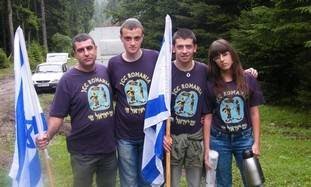
After hearing about the tragic crash of a helicopter that killed six Israeli military personnel and one Romanian, staff members and campers at a nearby JDC summer camp in Romania responded with aid for the rescue and recovery teams.  The Jerusalem Post ran a feature and interviewed JDC staff in Romania about their efforts.   

Photo by Yaakov Katz

Check out the article, JDC camp in Romania aids rescue and recovery crews.