Showing posts with label In the Press. Show all posts

June 25, 2012

JDC Israel Focuses on Empowerment

By Rebecca Neuwirth, Director, JDC Ambassadors

A huge moon is hanging over my shoulder in Tel Aviv, a city I haven't been to since I became a mother over seven years ago and put a brake on long travel.

A lot has changed in that time, but not the tender breeze, the slightly sweet smell of blossoming summer in a dusty city. The smell of cats too - in every small street I sense them - on steps and mailboxes and sliding between parked cars. The simple cafes, the handsome people, the certain knowledge that the ocean is just hidden beyond these small streets, win me over again.

I'm here with 70 people for the JDC Board mission. We are visiting projects that address serious social issues in Israel. I'm excited to see that JDC is hitting all the right notes.

June 4, 2012

Jewish Book Council/The Forward Arty Semite Blog Features Post about 'The Joint'


Leslie Maitland, former New York Times reporter and author of a new memoir about her mother, Crossing the Borders of Time, has blogged for the Jewish Book Council, and republished by The Jewish Daily Forward, about JDC and how 'The Joint' saved her family during World War II. The piece also includes an interview with Linda Levi, Director of the JDC Archives.

Read her blog post at The Arty Semite.  

April 18, 2012

The Latest Briefing From Steve Schwager, JDC CEO


Join us on May 8 for our JDC Ambassadors luncheon to hear Will Recant speak more in depth about his work.  The lunch will focus on JDC's efforts in rescue and reconciliation in conflict zones.    

The op-ed  piece below, written by Will Recant, JDC’s International Development Program (IDP) Director and Assistant Executive Vice President, appeared in the Cleveland Jewish News after Will spoke at a Jewish Federation of Cleveland event.  It’s all about tikkun olam, the philosophy of caring, and the partnerships that help make it all happen.   And for Penny and me, it’s also about the very soul of JDC’s non-sectarian mission.

WILLIAM RECANT
Special to the CJN
Our rabbis and sages taught us that the Jewish people are to be a “light unto the nations.” But what does this mean in 2012, especially in a world wracked by economic instability, war, and natural disasters?

For an organization like the American Jewish Joint Distribution Committee (JDC) – which every day rescues Jews in danger, alleviates hunger and hardship among the poorest and most helpless Jews, revitalizes Jewish communities outside of North America, and helps Israel provide a better future for its most vulnerable people – it means upholding and continuing our historic tradition of supporting victims of natural and man-made emergencies and disasters.

From our earliest years, JDC has shared its expertise and the very best programs developed in the Jewish world and especially in Israel with others during their hour of need. A look at JDC’s work in earthquake-ravaged Haiti and post-genocide Rwanda gives a picture of exactly how we save lives and put people back on the path of recovery.

March 20, 2012

JDC OUTRAGED BY TOULOUSE JEWISH SCHOOL ATTACK

Paris, March 19, 2012― Following the horrific killings of a teacher and three students at the Ozar Hatorah School in Toulouse, JDC President Penny Blumenstein, CEO Steven Schwager, and Europe Director Alberto Senderey released the following statement:

"We are horrified and outraged by today’s barbaric attack at the Ozar Hatorah School in Toulouse. Understanding full well the notion that all Jews are responsible for one another, we mourn the loss of these innocent lives and stand together, at this time of sorrow, with the entire French Jewish Community. We hope and pray that the perpetrators will be swiftly apprehended and brought to justice.”

JDC, a global Jewish organization operating in more than 70 countries worldwide, is in direct contact with the French Jewish community through its office in Paris and is continuously monitoring the situation as it develops. Over the years, JDC has partnered with the Ozar Hatorah educational system on a variety of projects including its current work in Morocco.

March 5, 2012

JDC Global Archives Website Brings Jewish History to Life


The launch of the JDC Archives website is featured in the New York Times.  You can also view some great photos on the New York Times website HERE.   


Also, check out the post about the launch at eJewish Philanthropy.


Which U.S. president publicly urged Americans to support the first campaign aiding war-ravaged Jews overseas? Which organization brought the first John Deere tractor to Ukraine? What killer disease was eradicated in Ottoman Palestine by a Jewish doctor?


February 7, 2012

JDC Responds to Extreme Winter Weather in Europe and Former Soviet Union

New York, February 3, 2012― As a wave of dangerous winter weather continues to grip Eastern Europe and parts of the former Soviet Union, the American Jewish Joint Distribution Committee (JDC) has activated its emergency winter response system to supplement the care it already provides to tens of thousands of Jewish elderly and needy children at this time of year. In addition to the heating fuel, blankets, warm jackets, clothes and boots JDC has provided for 20 winters in the past, JDC staff are currently providing extra heating supplies and food to those who cannot leave home and called to check in on those who need additional medical care in some of the hardest hit areas like the Balkans and Ukraine.

"We've been able to mobilize quickly and respond to this latest deep freeze because emergency protocols are inherent to our historic winter relief program. For these Jews, many of whom have no one else to turn to, we are there to ensure an extra lifeline and much-needed sense of community at this time," said JDC CEO Steven Schwager.

In Bulgaria, temperatures hit record lows and Sophie, an elderly Sofia resident, was found by her JDC social worker in her kitchen - the only room in her small apartment with central heating - fully clothed in a winter hat, a heavy sweater, and gloves. JDC provided Sophie with two electric heaters and will cover her electricity bills for January and February ― costs that would consume 60% of her meager monthly pension. This emergency assistance supplements the daily hot meal and medicines Sophie regularly receives from JDC.

Every year, in addition to winter relief, JDC provides a variety of welfare assistance and Jewish community connections to needy and vulnerable Jews throughout Europe and the former Soviet Union.

October 17, 2011

Op-Ed by JDC CEO Featured in Wall Street Journal

JDC's CEO Steve Schwager wrote a wonderful op-ed that recently appeared in the Wall Steet Journal 'Houses of Worship' column in the Editorials section. 

You can read the article on the Wall Street Journal Website

Wall Street Journal -- HOUSES OF WORSHIP
OCTOBER 14, 2011

A Miraculous Post-Soviet Religious Revival

Jewish practice has come a long way since owning a Russian copy of Leon Uris's "Exodus" could land a Jew in jail.

By STEVEN SCHWAGER

As Jews around the world gather to celebrate Simchat Torah next week—the raucous holiday marking the completion of the annual cycle of public Torah readings—I am reminded of one of the more curious practices among Soviet Jews in the final decades of the Communist regime.

Living under duress, these Jews gathered illegally in homes or even in the streets to celebrate a holiday for an object that most had never seen, let alone read from. Such celebrations persisted despite systematic anti-Jewish persecution by the Soviets, including university quotas, discouragement from certain jobs, and an all-out effort to eradicate Jewish culture and religion.

And yet 20 years after the Soviet Union's fall, this act of defiance has taken on an entirely different character. That's because—contrary to all expectations—we are in the midst of one of world's more miraculous revivals of Jewish civilization, and in much of the former Soviet Union such celebrations are no longer taboo. In fact a million or so Jews in former Soviet states are now celebrating their faith, history and culture with an enthusiasm previously unimaginable.

I credit this renaissance to two main forces.

First, and perhaps most extraordinary: the resilience of Jews whether in Ashkabad, Chisinau or Tbilisi. After the tsars and the Soviets, they cautiously embraced their new freedom and began to explore, on their terms, what it meant to be a Jew in an open society.

Second: the indefatigable efforts of American Jews and Jewish organizations. My organization, the Joint Distribution Committee, was actually described by Stalin's prosecutors as the "international bourgeois Jewish-Zionist organization" allegedly behind the notorious "Doctors' Plot" of 1953.

In reality, of course, the plot was a Stalinist fabrication and a pretense for anti-Semitic propaganda, show trials and executions. Nonetheless, we and many others continued our secret work in the Soviet Union. Then in 1991 we openly continued in the new states that emerged, with hands full of instruments of Jewish knowledge and tradition, helping to recreate Jewish life.

The quest for Jewish knowledge and community life, pa Ruski, is tangible among people grappling with the challenges of post-Soviet societies. And yet not only can Jews of all ages pray in a variety of synagogues—from Chabad to Reform congregations—they can also engage in bar and bat mitzvah retreats in the hinterlands of Siberia. In Hebrew and Russian prayer books, religious schools and even online, in the world's first Russian-language Jewish education guide, they are learning about the Jewish New Year, the Torah, Israel, Passover and the mitzvot (commandments) that make up Jewish life.

In almost 200 Jewish Community Centers, music, art, dance and more lead to creative expressions of identity. As Moscow suffered from soaring temperatures and nearby forest fires two summers ago, young Jews at the local JCC—who inherited a society that eschewed modern philanthropy—led an unprecedented Facebook campaign to deliver food, fans and comforting words to the community's poor and elderly.

In the public square, 200 Jewish libraries containing more than a million Jewish books complement the Jewish Studies courses at more than 100 universities in the post-Soviet region. In 16 Hillel centers, meanwhile, thousands of Jewish students are embracing their identity and wearing it publicly. Such pride was evident when Vladimir Goodkov, the Jewish winner of the popular Ukrainian Stars Factory program (a version of American Idol), had his friends from his Jewish youth group in Kharkov celebrate Shabbat dinner with him and his co-contestants on Ukrainian National TV.

When asked who inspired his decision to choose a televised Jewish meal over a concert in Cannes or his own CD release, he said: "The way I am now—enthusiastic, not afraid to say anything—is thanks to the people, the community that I became part of."

It is a long journey from the days when owning a book in Hebrew or a Russian-language copy of Leon Uris's "Exodus" was enough to get a Jew sentenced to jail.

Mr. Schwager is CEO of the American Jewish Joint Distribution Committee.

June 13, 2011

JDC's Efforts in Haiti Highlighted in the Press

JDC's efforts in Haiti are featured prominently in an article that was published recently in the Jerusalem Report. 

Rubble and Repair
By EETTA PRINCE GIBSON, PORT-AU-PRINCE, HAITI
01/06/2011

Photo by: REUTERS
Israeli and Jewish organizations continue to give aid to Haiti. The 'tikkun olam' efforts are an opportunity to repay a debt to the Haitians - a nation that took in Jews during the Holocaust.

DIAPERLESS CHILDREN crawl between the densely, erratically pitched tents. The heat is heavy and dank, the fetid stench of human waste and misery blows strong. The tent flaps are open, but the residents of this squalid camp seem not to notice the intrusion; there is no privacy here to invade. Women wash laundry in dirty basins or fry over open fires in rancid-smelling oil.

Some 60,000 people subsist here. And somewhere in the midst of the warrens is the large statue of the Neg Marron, the unknown slave, blowing a conch shell and holding a machete, broken chains at his feet.

This is the symbol of Haiti’s independence, a representation of the slaves who claimed their freedom in 1801, making Haiti the second country in the Americas to declare its independence.

The Neg Marron is located in what was once a series of green parks and wide boulevards that formed Haiti’s national mall, with the iconic “White House” presidential palace in the background. But since January 12, 2010, when the 7.0 magnitude earthquake, regarded by many as one of the 10 worst natural disasters in history, struck the island, the mall, like every other available open space in Port-au-Prince, has been a tent camp. The White House, still an absurdly pristine white, lies in crumpled wreckage, an unmistakable reminder that little has improved since those horrible moments when the earth moved, and that the Haitian government is almost completely non-functional.

Tents donated by the People’s Republic of China have been tethered to the Neg Marron’s outstretched arm. A makeshift antenna sprouts from the conch.

“Human beings deserve better,” says Gideon Herscher, field representative of the American Jewish Joint Distribution Committee (AJDC).

According to official Haitian government figures, 316,000 people died in the earthquake and nearly 1.5 million were left homeless. A cholera outbreak followed in the fall and in early 2011. The world, including foreign governments, the International Red Cross, the UN and the Clinton Global Initiative, promised massive aid. But according to data from several relief organizations, of the $5.8 billion pledged, less than half has actually been dispersed – and much of that has been in the form of debt relief to the corrupt Haitian government.

Several Jewish and Israeli organizations are actively providing aid to the Haitian people. JDC, whose disaster relief and development programs constitute the primary overseas efforts of the Jewish federation system, has made a three-year commitment of $7.7 m., contributed by some 10,000 North American Jewish donors, according to Michael Geller, AJDC communications director. Almost all of that money is disbursed to partner organizations, especially Jewish and Israeli ones. The American Jewish World Service (AJWS), an international development organization that was involved in Haiti for 10 years prior to the earthquake, has, according to President Ruth Messinger, already spent more than $1.19 m. and will spend a total of at least $6 m. by December 2013, almost all of it in direct grants to Haitian grassroots organizations.

Within 72 hours of the quake, the Israeli military had already set up the first, and for weeks the only, operational field hospital in Haiti. IsraAID, the coordinating body of Israeli and Jewish development and relief organizations that are based in Israel, set up an additional medical unit within days and continues to sponsor several projects, among them Tevel B’tzedek/IsraAID, an Israelibased, grassroots community organization.

Shahar Shtrikman, 23, from Kibbutz Lotan in the Arava desert in Israel’s south, at the time a conscript medic, was part of the 220- person IDF team. Not knowing what they would find when it arrived, or even where they would be able to set up, Shtrikman recalls, the team had to improvise and adapt, eventually setting up in the soccer stadium that had remained relatively unscathed.

“At the time, I didn’t think about why we were going, I just knew we should go,” he recalls, talking with The Report through Skype from Bolivia, where he is on a postarmy trek. “In retrospect, I do know why we had to go. We had to go because we could help. If you can help, then you have to help.”

ABUSED BY COLONIAL occupiers, raped by its own dictators, ravaged by poor planning and exploited by richer countries, including the US through the North American Free Trade Agreement (NAFTA), Haiti has never lived up to the Neg Marron’s promise. Freed of the shackles of slavery, it never freed itself enough to develop.

Only a one-hour plane ride from Miami, Haiti is the poorest country in the Western hemisphere. According to UN figures, even before the earthquake more than 70 percent of the population was living on less than $2 a day, and 86% of the people in Port-au- Prince were living in slum conditions in tightly-packed, poorly-built, concrete buildings.

Half of the residents of the city had no access to latrines and only one-third had access to tap water.

For decades, the country has been regularly disrupted by political and social violence; in 1993, the UN Stabilization Mission for Haiti (now referred to as MINUSTAH) was dispatched to quell riots and has remained there, but has done little to help the country move forward.

The epicenter of the earthquake wasn’t in Port-au-Prince, but the city was built so poorly that most of it collapsed. Experts estimate that if 1,000 bulldozers were working 24/7, it would take three years to remove enough rubble to start rebuilding Haiti. But there are hardly any bulldozers working at all. There isn’t even regular garbage collection; the few municipal services that were available before the earthquake no longer function. There are no public schools or other educational facilities.

Never built according to any clear pattern, Port-au-Prince’s twisting roads are still blocked with debris, gushing water from broken mains, running sewage, and makeshift markets where people hock whatever wares are available that day. There are no sidewalks, and masses of people walk in the streets. Tap-taps, the ubiquitous, forcefully decorated vans that serve as public transportation, honk and lurch their way through the crowds. Tents are everywhere, even on the median strips along the few wide boulevards. Port-au-Prince has always been marred by street violence, but now the crowded camps are sites of gang warfare, rape, theft and random murder.

Jerry Jean Baptiste, 26, formerly a customer service agent for a mobile phone company and a student of business management, is now employed as a local organizer by the AJDC. As the organization’s leased, battered pick-up truck struggles over the roads, he reveals that Haitians refer to the earthquake as goodogoodo. “It’s a sound more than a word,” he explains to The Report. “It marks time, before and after.”

Baptiste says he doesn’t want to talk about what happened to him, only that he is thankful that he and his family are safe and sound.

It is a year and a half after the quake and people tell their stories slowly and painfully – the long seconds of terror, the people crushed under concrete next to the dead bodies of their friends and families, the fear that is always there, the struggle to survive.

His tone easing, Baptiste continues. “We began to realize that we have been lacking too much for too long. And if, with all this international help, we can shake ourselves into action, then at least we can have hope for the future.”

Like so many Haitians, Baptiste is critical of much of the international aid organizations operating in Haiti. “International relief people come here and they tell us what we should do, how we should do things. And then nothing happens. They bring their own people to work here instead of giving us work. With all the people who are here, and with all the money they’ve promised, the situation should be better.” But he is quick to praise his employer. “I’m proud that I work for AJDC. I see where the money goes – it’s used smart. Israel and the Jewish people, they understand us. Their help is worthwhile.”

PETIONVILLE, A WEALTHY SUBurb in the hills above Port-au-Prince, was spared most of the earthquake’s damage. Better-built and higher up than Port-au-Prince, the mansions decorated with fancy wooden latticework known as gingerbread, the expensive restaurants and the well-stocked supermarkets with wide aisles selling luxury-brand foods flown in from Miami and Paris are largely intact.

Salsa dancing is all the rage here, and in his classy club, behind heavy gates, Gheorges “The Gladiator” Exantus, 30, is performing, his moves long, slinky and sexy.

Dr. Yitzchak (Tzaki) Ziv-Ner, deputy chairman of the Israel Medical Association and head of the Association of Government Physicians, leans back and watches the performance. He bets a round of drinks if anyone can tell which of Exantus’s legs was amputated. He wins the bet easily.

Until the earthquake, Exantus had been a national championship salsa dancer and a computer programming student. He had had a strong career and a solid future. But the earthquake trapped him for three days under the rubble of his home, his feet and hand pinned under cement blocks. His right leg had to be amputated below the knee and his left hand remained severely twisted.

Exantus was referred to the Haiti State University Hospital (HUEH) in Port-au- Prince, where Ziv-Ner runs a JDC-sponsored rehabilitation clinic in cooperation with Israel’s Magen David Adom (MDA) and the Haitian Red Cross. From there Exantus was sent to Sheba-Tel Hashomer Hospital near Tel Aviv, where Ziv-Ner’s team performed micro-surgery to restore full use of his hand, and fitted him with a state-of-the-art multi-axle ankle and storedenergy foot.

“Rehabilitation,” says Ziv-Ner, “means that the person can go back to doing what he used to do before he was injured. If Gheorges could dance before the earthquake, then rehabilitation should bring him back to being able to dance.” Ziv-Ner is clearly enjoying himself and gets up to dance, to the delight of the performers. He and Gheorges embrace.

The next day Ziv-Ner is in his clinic.HUEH is composed of a large number of small whitewashed buildings, once surrounded by grass and trees. Now there is rubble everywhere and some of the structures are in danger of collapsing. The open spaces are crowded with people, some begging for money to buy medication or food, others seeming to have little purpose. The hospital is poorly developed, understaffed and ill-equipped; most of the staff has not received a salary in months.

The JDC clinic, consisting of two small examination rooms and a corridor filled with rehabilitation equipment, is located in a small building on the HUEH grounds. It is staffed by physicians and physical therapists from Sheba-Tel Hashomer Hospital who come to Port-au-Prince as volunteers for three-week rotations.

The walls have been freshly painted white with green trim, but the rooms are dingy. Records are kept by hand and on a particularly hot day, the air conditioning – a noisy unit in the window – doesn’t work very well.

By March 2011, the clinic had treated some 1,200 patients and the lines are still long. Ziv-Ner examines the patients with competence and a respectful yet smiling, easy manner that inspires confidence, even across the language barrier. Collegially, he mentors a new orthopedic surgeon who will in the future, he hopes, take over as director of the rehab clinic.

“We came here not knowing what to expect,” Ziv-Ner tells The Report. “We came with sleeping bags and whatever we could carry. We learned that rehabilitation and physiotherapy simply don’t exist here. So while we’re treating patients, we’re also teaching local physicians and training professional personnel.”

JDC has managed, in partnership with other international and local organizations, to create a full-service rehabilitation program, albeit scattered throughout the city and its environs. In addition to the clinic, they have established a state-of-the-art workshop to create prostheses with the help of donations from a German foundation.

With almost childlike glee, the AJDC’s Herscher relates that when the sophisticated, delicate equipment was finally delivered from the port – after “no small struggle to convince the customs authorities,” he says pointedly – the staff was unable to find a forklift to move it in. “So we actually lifted it, a bunch of us. It was great,” he says, obviously enjoying the “just-do-it” and rakish attitude that it takes to make things happen in Haiti.

In one of the camps, JDC, in partnership with Afiya, an American-based medical relief foundation (afiya means “good health” in Swahili), is training Haitian carpenters to become adaptive builders and produce individualized solutions for amputees, such as a harnessed walker-on-wheels for a two-yearold amputee too young to manage crutches, or a vegetable cutting board for a mother with only one arm.

Antoine Yves, 32, used to be an electrical and plumbing technician, but the company he worked for no longer exists and he now works for Afiya. “I am lucky that I can help people and not need the help,” he tells The Report in perfect English. “I’m lucky because no one in my family died. But I know that none of us will ever be the same.

We all have a symptom now – even when I don’t realize it, I’m always thinking about the earthquake. I’m worried that my world might shake again.” He stops for a moment, as if reconsidering.“Haiti has always been in a bad state. And even with all the help, we’ll still have all the problems we always had. But at least I have the same chances I had before, too. At least I don’t have less of a future than I had before.”

Says Ziv-Ner, “I know that we are not going to save Haiti. As Jews we are told that saving one life is equal to saving the whole world. So maybe we are trying to save the world, one leg, one arm, one life at a time.”

“FONDWA,” SAYS HERSCHER, “is a place that really can’t exist in Haiti. But it does.” Fondwa is a small village about 80 km (50 miles) and a good two-and-a-half-hour drive on difficult roads west of Port-au-Prince.Until 1988, it had no potable water, no health care, no schools, no roads and no access to communication. But then Fr. Joseph Philippe established Asosyasyon Peyizan Fondwa (the Association of the Peasants of Fondwa, or APF). Over the years, through APF, he created schools, a credit union, a radio station, Internet service, paved roads, an orphanage and an order of religious women, the Sisters of St. Anthony. In 2004 he opened the University of Fondwa, based on a “workingcollege” model in which students work in jobs in agronomy, veterinary medicine and management to cover their educational fees and gain experience.

Illiteracy rates are now down, health standards have improved, and agriculture is more profitable. No less important, the residents have a sense that they have taken control of their lives and that they may be able to find a way out of poverty.

More than 80% of the 8,000 residents of Fondwa are peasant farmers and more than half of the population is less than 20 years old. Twenty-five people died in the earthquake and over 100 were seriously injured. Most of the buildings, including all institutions, collapsed; none escaped damage.

Both the JDC and AJWS are working with the APF and supporting Father Joseph’s efforts, many of which are based on liberation theology and the best principles of community organization. Through Heart to Heart, an international faith-based organization dedicated to services for children, the JDC is financing the construction of a new school in place of the one that collapsed.

Through Partners in Health, (known in Haiti as Zanmi Lasante), the international health organization founded by Paul Farmer, they have brought a “clinic in a can,” a fullyequipped medical facility set up in a container to provide services to Fondwa and its environs. In the period immediately after the quake, when the roads were still completely impassible, the AJDC improvised and procured a boat to ply medical services along the coast; since Haiti is a narrow island, most of the people in the area were able to access health care only by moving north or south.

AJWS has worked with Father Joseph, as he is known to all, to develop a master plan for the Fondwa region. It also helps to support Fonkoze, the micro-finance bank he founded in 1994 with no capital and few investors.

Today, according to Anne Hastings, an American ex-pat in Haiti who is an advisor to AJWS, Fonkoze holds more than $20 m., employs more than 900 people and provides loans to some 70,000 recipients.

Father Joseph combines faith, knowledge, devotion and practicality with a robust sense of humor. “As a priest, I am also a teacher,” he explains. “A teacher has to give grades. I give God the difficult projects and if God doesn’t get them done, He deserves an ‘I’ for incomplete. Now how can I give God an incomplete? After all, God has no sense of time. But we humans do. And we know that if after 200 years Haiti still isn’t independent, then we have to get to work. God isn’t going to do it all for us.”

Committed to sustainability, Father Joseph rejects a plan that calls for using non-indigenous building materials for construction in Fondwa. Respectful of his demands, Herscher nevertheless tries to prod him to make decisions, because the grant money must be dispersed. They clearly enjoy each other’s company, discussing everything from liberation theology to sustainable development.

“When you [yourself] have suffered, it is natural to be in solidarity with those who have suffered,” Father Joseph says. Pointing to Herscher he says, “You call it tikkun olam [repairing the world].” He laughs. “See, I’m learning Hebrew from you.”

THE PETIONVILLE CLUB, Port-au- Prince’s golf and tennis club, located near the well-guarded American ambassador’s residence, is now a tent camp for an estimated 50,000 people. But even within the squalor of the camps there’s a hierarchy of luck, and this camp has been taken over by the J/P Haitian Relief Organization (J/P HRO), headed by actor Sean Penn. The tents are layed out according to a plan, and Penn’s group has organized the residents in pay-for-work programs to dig drainage trenches and clear rubble.

Thanks to the grassroots organizing that Penn funds, local teams guard the solar panels that light up the areas around the showers and latrines, so there are fewer gang rapes here than in the other camps.

Tevel B’tzedek/IsraAID, a non-profit, Israel-based organization for social and environmental justice that also sends volunteers to Nepal, was one of the first such groups to arrive in Port-au-Prince after the quake.

Initially, the dozen or so Israeli volunteers lived in tents, but they eventually moved into the large, ramshackle building that was once part of the golf course complex. Later joined by the volunteers from J/P HRO, they worked with the residents to set up schools, clinics, afternoon programs for children and literacy programs for adults, and even helped some of the entrepreneurially-minded residents to set up makeshift cafeterias and beauty salons between the tents.

Feeling that they were no longer needed at the Petionville Club, most of the Tevel B’tzedek/IsraAID group moved on to the Leoganne district, some 28 km (15 miles) southeast of Port-au-Prince and the area of the epicenter of the earthquake. Ira Polak, 32, an MA student in social work from Haifa, has stayed in the camp, helping her “dream team” to develop.The dream team, she explains, is what the 35 or so teenagers in the camp call themselves.

With guidance from Polak, they have become a leading organizing force in the camp, maintaining order, representing the residents to officials, and organizing social and educational activities for children, adults and themselves.

Speaking thoughtfully, Polak recalls that as a child, she was brought out from Moldavia by the AJDC, and she remembers the Israeli volunteers who made her feel safe in the refugee camp. “We’re not building homes here,” she tells The Report. “We’re building psychological and emotional space – something that each one of these youths can take home to his crowded, awful tent, so he can believe that the future will be better.”

Polak says she is proud of what Tevel B’tzedek/IsraAID has accomplished in the camp, and she is clearly delighted with the dream team’s accomplishments. “I don’t know why we Israelis are so good at helping people when we’re outside of Israel, when we are not so great at building our own society. But I do know that here, we’re doing good and we’re doing it right. We’re not wasting money and we’re not creating dependency.”

She uses the term “very Jewish” when describing what they do. “We pitch in, we’re informal. I know that throughout Jewish history, Judaism has emphasized difference, but we also have a real ability to connect, to feel other people’s pain and hopes.”

There are smaller Jewish and Israeli groups volunteering in Haiti, too. Jewish Healthcare International (JHI), an organization headed by Dr. Stephen Kutner from Atlanta that recovers, restores and rebuilds medical infrastructure in communities in need worldwide, is planning to provide a mobile eye unit to serve the northeastern plateau area of Haiti. The Israel Trauma Coalition (ICT), an umbrella group created in 2002 at the initiative of the UJAFederation of New York, provides direct psychological care to trauma victims as well as professional training.

Since sending the IDF field hospital immediately after the quake, the Israeli government has not been directly involved in aid or development work in Haiti. Yoel Barnea of Israel’s Agency for International Cooperation (MASHAV) at the Foreign Ministry, tells The Report that Israel may soon be sending Israeli agricultural experts to Haiti to volunteer as advisors in connection with Tevel B’Tzedek/IsraAID.

ALTHOUGH THEY ARE involved in some of the same projects, the AJDC and AJWS operate according to different strategies and objectives.

The AJDC, Herscher explains to The Report, always remains “one degree removed,” working through local or international programs and emphasizing Israeli and Jewish involvement whenever possible.

AJWS, Messinger emphasizes, funds local grassroots initiatives. Neither organization maintains offices or infrastructure in Haiti.

Back in Israel and in North America, the organizations distrust each other as they compete for the same funds from the North American Jewish community. But in Haiti, cooperation among the Israel- and North American-based Jewish organizations is fluid and smooth, thanks largely to Herscher, who regularly flies in from Israel, where he is based, for a week or two to coordinate and monitor the AJDC’s activities and acts as coordinator and mediator, and occasionally, referee.

Wiry, athletic, intense and talented, Herscher is always at the center of the goings-on. He seems to know everyone, Haitians and international aid workers alike, and know everything, from the location of a semi-secretive orphanage in a church where children were abandoned after the quake, to how to find a flatbed truck to transport building equipment to the countryside, and even where the better restaurants in Petionville are.

Herscher, who was born and raised in California and has lived in Israel for most of his adult life, manages to be both spontaneous and carefully analytic at the same time.

Articulate, thoughtful and well-read, he debates philosophy with Father Joseph, who wants him to teach a course on Jewish philosophy at Fondwa University (Herscher demurs), and later stops the car to play guitar on the street with a young Haitian man he’s never met. (“He looked like he wanted to jam,” Herscher tries lamely to explain.) He is the contact person for every Israeli and Jew in Haiti, whether taking care of lost passports or guiding a UN worker who has become increasingly observant of kashrut and Shabbat. For a Friday night, he persuades a very willing Sharona Natan, daughter of the late Israeli peace activist Abbie Natan and a resident of Haiti for more than 20 years, to help cook a Shabbat dinner for all the Jewish volunteers in Port-au-Prince, complete with Kiddush and a Torah lesson. Somehow, he locates close to two dozen people.

WRITING IN “THE CHRONICLE of Philanthropy” in March 2011, development expert Suandra Schimmelpfennig says there are between 1,000 and 10,000 aid organizations currently working in Haiti – no one knows the exact number. Most of them, she contends, raise money in a vacuum, without coordination and without consulting the locals. But the Jewish organizations seem to coordinate efficiently among themselves and with their partner organizations, thanks to an informal round table that Herscher convenes. In Israel, most of the organizations meet together regularly. And the Jewish Coalition for Disaster Relief is a worldwide round table composed of all Jewish aid organizations, coordinated by the AJDC.

Like the other aid workers, the Israeli and North American Jewish volunteers stay at hotels in Port-au-Prince that, because they were constructed more solidly, withstood the quake. And like all the other internationals, they wear T-shirts emblazoned with the logos of their organization and hang signs with their group’s name in huge letters over the projects they sponsor.

Yet they are not part of what many derisively call the “aid parade” of workers hanging out in the hotel lobbies and bars. And they are widely admired. Says a worker representing a large multinational aid company who asks to remain anonymous, “The Israelis are different. They are more serious about what they are doing. They get things done. They’re smart and fast and they know how to improvise.

Our large organizations have huge bureaucracies, and many of us are jaded. But the Israelis try real hard; they care, and they work really well with the locals.”

Adds Contave Jean Baptiste, coordinator for AJWS in Haiti, “Some groups come and try to implement the strategies they used in other countries. They don’t understand that each country is different and that it takes time to learn. AJWS respects our culture; they listen to us and they’re helping us get out of the passivity that has been eating away at Haiti for so many years.”

In numerous publications, Steven Schwager, AJDC executive vice president and CEO, has emphasized that the Jewish world is indebted to the Haitians because they were willing to take in Jews during the Holocaust. Although there is currently no indigenous Jewish community there and few strategic reasons to remain, the AJDC has committed to a three-year plan. Yet asked if the work in Haiti is, if only somewhat, “Jewish,” Herscher first retorts, “Just asking that question is a quintessentially Jewish moment.” Then he sums up simply. “This really is tikkun olam, repairing the world. It makes sense; it’s what we should be doing. I see what Haiti could become instead of merely going back to what it always has been. That is our faith.”

June 10, 2011

MAZAL TOV!

Mazal tov to Sarah Eisenman, JDC's Director of Next Generation and Service Initiatives on being named a Jewish leader of the future who is "doing interesting things in the Jewish sphere" by The Jerusalem Post.


From the Jerusalem Post

The Jewish leaders of the future?


By GIL SHEFLER
07/06/2011

The rising stars of the Jewish galaxy will be better educated, fluent speakers of both English and Hebrew (at least) and include more women, if the following list is any indication.

We chose 10 people – media moguls, political activists, diplomats, artists and speechwriters – under the age of 32 who are doing interesting things in the Jewish sphere. While we believe these individuals are certainly among the best and the brightest, the list could have easily been expanded to include another 10, 20 or 30 equally gifted candidates. The good news is that despite often-heard complaints about the dearth of good, young Jewish leaders, there seems to be no shortage of talent to take over at the helm once the baby boomers retire; one just has to look in the right places. Ten years from now, or even sooner, we expect some of our selections to have risen to powerful positions, and when that happens, we’ll take all the credit for having found them first.

SARAH EISENMAN
Director of Next Generation at the JDC

As one of the world’s top experts on the Dead Sea Scrolls, Prof. Robert Eisenman has dedicated his career to conduct research into the past of the Jewish people. His 32-year-old daughter, Sarah Eisenman, however, is more interested in exploring its future. As the head of the American Jewish Joint Distribution Committee’s Next Generation she is tasked with introducing young Jews to the 93-year-old relief group and involving them in Jewish activism in a global context.

“We started involving young people into the service and putting together a young corps where people can go serve eight days, 10 days, a month or a year – just let them get out there,” she says.

Today, about 400 Jewish volunteers join her program every year and are shipped off to faraway destinations such as Peru and Rwanda to provide relief and aid work.

“I see this as being much bigger than the JDC. It’s about creating a generation that can contribute to the Jewish world,” she says. “In 2008 one million Americans volunteered abroad so you can see people are being more global oriented, and we in the Jewish community are trying to prepare people for dealing with 21st-century global challenges.”

For her efforts the Californian native has won the praise of JDC’s most senior leadership, and one official even said she could head the organization 20 years from now. Perhaps that’s why Eisenman is so concerned with revitalizing JDC – she wants to make sure it’s still a vibrant institution if she gets hold of the reins.

To read the full article, please go to the Jerusalem Post website.

May 23, 2011

20 YEAR AFTER OPERATION SOLOMON, JDC HELPS IMPROVE ETHIOPIAN-ISRAELI LIVES

FOR IMMEDIATE RELEASE


New York, May 22, 2011 – Twenty years after the American Jewish Joint Distribution Committee (JDC) took a leading role in the miraculous airlift of more than 14,000 Ethiopian Jews to Israel, the humanitarian aid organization continues to support and help integrate Ethiopian Israelis into Israeli society. With dozens of nation-wide programs strengthening the lives of Ethiopian Israelis of all ages, JDC - through the support of the Jewish Federations of North America - helps ensure advancements in early childhood education, employment, and national service.

"Two decades after we helped bring this ancient Jewish community to safety, we're proudly working everyday to fulfill the promise of the startup nation for this and future generations of Ethiopian Israelis," said JDC CEO Steven Schwager. "Just as we praise the many individual successes from this vibrant community, JDC also addresses the challenges it faces in partnership the Government of Israel and together with the laudable efforts of the Jewish Agency for Israel and the Ethiopian National Project."

One of JDC's flagship programs, Parents and Children Together (PACT) works to enhance Ethiopian-Israeli children's literacy skills and educational performance to improve their academic success by addressing the unique cultural and language barriers they face. Today, 11,000 children and their families benefit from PACT. Additionally, JDC helps Ethiopian-Israeli high school students overcome language and other academic disadvantage so they can successfully graduate and earn their matriculation certificates.

JDC also helps Ethiopian-Israelis successfully serve in the Israel Defense Forces by guiding these youth and their parents before, during, and after their enrollment. JDC has developed numerous employment services to help Ethiopian-Israelis obtain the skills needed to thrive in a modern workforce. JDC also helps restore dignity and pride among elderly Ethiopian Israelis through a program where they restore run-down communal gardens and transform them into vibrant centers of neighborhood life.

View a slideshow of JDC's work with Ethiopian Israelis - from pre-Operation Solomon to today - and watch a video on JDC's role in the historic airlift celebrated on May 24.

April 12, 2011

JDC Staff Member To Be Appointed to US Commission By President Obama

From:         Irv Smokler
                 Steve Schwager

Re:            Herbert Block

Date:         April 11, 2011

Please find below the JDC Press Release regarding President Obama's intent to appoint Herbert Block to the U.S Commission for the Preservation of America's Heritage Abroad.

Mazal Tov to Herb on this much-deserved honor. The entire JDC family is very proud of this anticipated appointment.

************************************

FOR IMMEDIATE RELEASE

PRESIDENT OBAMA ANNOUNCES INTENT TO APPOINT JDC’S HERBERT BLOCK TO U.S. COMMISSION FOR THE PRESERVATION OF AMERICA'S HERITAGE ABROAD

New York, April 10, 2011 - Following the White House announcement that President Obama intends to appoint Herbert Block, an American Jewish Joint Distribution Committee (JDC) Assistant Executive Vice President, to the U.S. Commission for the Preservation Of America’s Heritage Abroad, JDC CEO Steven Schwager lauded Block’s distinguished work in the areas of Holocaust-era property reclamation, Jewish community development, and public policy.

“We are extremely proud that President Obama has chosen to recognize Herbert's outstanding public service, especially his passionate dedication to reclaiming the past and shaping the Jewish future,” said Schwager. “As an organization devoted to rebuilding Jewish life in the farthest corners of Europe and the former Soviet Union, we are truly fortunate to have benefited from Herbert’s longstanding commitment to the Jewish people and the American values we all hold dear.”

The Commission -- an independent federal agency that helps preserve burial places, memorials, and places of worship in Eastern and Central Europe associated with the heritage of Americans -- identifies properties, negotiates U.S. agreements with the governments of the region, and encourages and facilitates private and foreign restoration, preservation, and memorialization efforts.

Block's work at JDC includes government affairs and efforts to restitute Holocaust-era assets. He represents JDC on the Board of the World Jewish Restitution Organization and serves on several European bodies dealing with Jewish heritage. Prior to JDC, Block's career included, among other roles, his service as the Deputy Director for Intergovernmental Relations at the federal Corporation for National Service and as Assistant to the Mayor of the City of New York.

April 5, 2011

JDC's Work in Japan Featured in Kansas City Jewish Chronicle

JDC's work in Japan was featured in the Kansas City Jewish Chronicle recently.  In the piece, Patricia Uhlmann, JDC Board member and Chair of the International Development Program Committee talks about the work of JDC in the affected region and how, with the support and partnership of Jewish Federations across the country, JDC is able to make a difference. 

Visit the Kansas City Jewish Chronicle website to read the article.

March 3, 2011

JDC AIDS CHRISTCHURCH EARTHQUAKE VICTIMS

FOR IMMEDIATE RELEASE

NEW YORK, NY, March 3, 2011 – The American Jewish Joint Distribution Committee (JDC) is working with the Jewish community of Christchurch, New Zealand to aid survivors of the city’s devastating earthquake. JDC funding will contribute to Christchurch Jewish community efforts to repair a damaged local synagogue and homes, replace household goods, provide financial stipends and temporary relocation costs, and support community-service or children’s programs for the wider community.

“As we extend our deepest sympathies to the families of Christchurch locals and Israelis lost in the earthquake, we’re cooperating with the Jewish community to ensure that people on the ground can start to rebuild their lives. As we have done in the past, JDC is delivering much-needed assistance to Jews and others in the wake of a disaster,” said JDC CEO Steven Schwager.

In addition to lost property, damaged homes, and businesses, the Jewish community’s synagogue was damaged and the Chabad House was destroyed by the 6.3 earthquake that struck on February 22. Christchurch, New Zealand’s second largest city, is located in the Canterbury Province which is home to 600 Jews. Jewish settlement in the region dates back to the early 1860’s.

“It means a lot to us to know that we are not forgotten, even though we are just a small community far away,” said Bettina Wallace, acting president of the Canterbury Hebrew Congregation.

February 9, 2011

JDC Board Member To Be Named Chair of The President's Advisory Council on Faith-Based and Neighborhood Partnerships

From Irv Smokler, President and Steve Schwager, CEO

A week ago we shared with you a White House blogpost recognizing JDC’s non-sectarian work in Haiti. Today it is our pleasure to share the exciting news from the White House last Friday afternoon that President Obama intends to appoint Susan Stern, a long-time JDC Board member and lay leader, as Chair of the President’s Advisory Council on Faith-Based and Neighborhood Partnerships. In 2009, Susie was the founding Chair of JDC’s Government Affairs Committee and now serves as our Special Advisor on Government Affairs. She is a long-time leader in UJA-Federation of New York, as well as the Jewish Federations of North America.

This is a well-deserved recognition of Susie’s tireless efforts on behalf of the Jewish community and people in need of all faiths and backgrounds. We share with you below JDC’s media statement, as well as the White House release. Most of all, we also share with you our pride in the accomplishments of a member of the JDC family.

*******************************************************************

CONTACT:
Michael Geller/JDC/(212) 885-0838
michael.geller@jdcny.org

FOR IMMEDIATE RELEASE

PRESIDENT OBAMA ANNOUNCES INTENT TO APPOINT SUSAN K. STERN, JDC LEADER, AS CHAIR OF THE PRESIDENT'S ADVISORY COUNCIL ON FAITH-BASED AND NEIGHBORHOOD PARTNERSHIPS

NEW YORK, NY, February 7, 2011 - Following the White House announcement that President Obama intends to appoint Susan K. Stern, longtime American Jewish Joint Distribution Committee (JDC) leader and JDC Special Advisor on Government Affairs, to Chair the President's Advisory Council on Faith-based and Neighborhood Partnerships, JDC CEO Steven Schwager lauded Stern's unwavering commitment to humanitarian causes and public service.

"We are incredibly proud that Susie has been recognized by President Obama for her unparalleled leadership and life-long devotion to repairing the world, contributing to America's future, and improving Jewish lives around the globe," said Schwager. "In a world racked by critical economic and social challenges, we have been blessed with Susie's support, friendship, and dedication to our mission to ease the burden of those who face hopelessness from Port-Au-Prince to Siberia."

JDC's global humanitarian assistance program includes the distribution of food, clothing, medicine, and basic needs to poor Jews and others in more than 70 countries. JDC has also pioneered a number of job training, micro-loan, and financial support programs that have been implemented in places like Argentina, Israel, and nations throughout South Asia. JDC has created and implemented these programs to address the needs of people facing sudden poverty during economic crises; vulnerable populations with high rates of unemployment or non-employment; or those who have lost their livelihoods in the wake of natural and manmade disasters.

**********************************************************************
THE WHITE HOUSE
Office of the Press Secretary

FOR IMMEDIATE RELEASE
February 4, 2011

President Obama Announces More Key Administration Posts

WASHINGTON – Today, President Barack Obama announced his intent to appoint the following individuals to the President’s Advisory Council on Faith-Based and Neighborhood Partnerships:

Susan K. Stern, Chair, President’s Advisory Council on Faith-Based and Neighborhood Partnerships

Leith Anderson, Member, President’s Advisory Council on Faith-Based and Neighborhood Partnerships

Andrea Bazán, Member, President’s Advisory Council on Faith-Based and Neighborhood Partnerships

Angela Glover Blackwell, Member, President’s Advisory Council on Faith-Based and Neighborhood Partnerships

Brian Gallagher, Member, President’s Advisory Council on Faith-Based and Neighborhood Partnerships

Bishop Mark Hanson, Member, President’s Advisory Council on Faith-Based and Neighborhood Partnerships

Lynn Hybels, Member, President’s Advisory Council on Faith-Based and Neighborhood Partnerships

The Most Rev. Dr. Katharine Jefferts Schori, Member, President’s Advisory Council on Faith-Based and Neighborhood Partnerships

Rabbi Julie Schonfeld, Member, President’s Advisory Council on Faith-Based and Neighborhood Partnerships

Archbishop Demetrios Trakatellis, Member, President’s Advisory Council on Faith-Based and Neighborhood Partnerships

Sister Marlene Weisenbeck, Member, President’s Advisory Council on Faith-Based and Neighborhood Partnerships

Reverend Elder Nancy L. Wilson, Member, President’s Advisory Council on Faith-Based and Neighborhood Partnerships

The President’s Advisory Council on Faith-Based and Neighborhood Partnerships brings together religious and secular leaders as well as scholars and experts in fields related to the work of faith-based and neighborhood organizations in order to make recommendations to the government on how to improve partnerships. The President will announce additional members to this Council at a later date.

President Obama said, “I am pleased to announce that these experienced and committed individuals have agreed to join this Administration, and I look forward to working with them in the months and years ahead.”

[For bios of all appointees click HERE]

Susan K. Stern, Appointee for Chair, President’s Advisory Council on Faith-Based and Neighborhood Partnerships

Susan Stern currently serves as Special Advisor on Government Affairs to the American Jewish Joint Distribution Committee (JDC), which is a humanitarian assistance organization helping Jews and non Jews in Israel and in more than seventy countries around the world. Ms. Stern also serves as Chair of the New York State Commission on National and Community Service and represented the agency on the Cabinet of Governor David Paterson. Additionally, she sits on the Executive Committee of the Jewish Federations of North America. Prior to her gubernatorial appointment, Ms. Stern was Chairman of the Board of UJA-Federation of New York and President and Chairman of National Women’s Philanthropy of United Jewish Communities. She has also been active in other organizations, including the Leadership Council of Repair the World, the Board of Trustees for the Washington Institute for Near East Policy, the Dean’s Advisory Committee for the University of Michigan, the Board of Directors for the Schneider Children’s Medical Center of Israel, the President’s Advisory Committee for Hebrew Union College, the Board of Directors of the Peter J. Alderman Foundation, and serves as an Alumni Fellow to the Wexner Heritage Foundation. Prior to her involvement in philanthropic causes, Ms. Stern was the first Director of Quality Assurance at the American Dental Association. She holds a B.A. from the University of Michigan and an M.P.H. from the University of Illinois Medical Center.

November 10, 2010

Haredim moving from yeshiva to high-tech, through the army

There's an inspiring story in this week's Haaretz daily newspaper about a JDC program that helps Israel's Haredi (Ultra-Orthodox) population gain employment and lift their families out of poverty. You can see the original at http://www.haaretz.com/themarker/haredim-moving-from-yeshiva-to-high-tech-through-the-army-1.322808 or read the text below:


Haredim moving from yeshiva to high-tech, through the army

By Ido Solomon

If it were only up to him, Meir, a 31-year-old ultra-Orthodox man from Bnei Brak, would dedicate his days to studying in yeshiva like his brothers and friends. Instead, every morning he gets up, puts on his air force uniform and travels to the base where he serves as a computer programmer.

His road from yeshiva to computers started four years ago. He'd been taught that his purpose in life was to study Torah, but the difficulty supporting his wife and two children pushed him to look for work. As someone whose education consisted mostly of religious studies, he found the choice of jobs open to him quite limited and the salaries low.

From friends, he heard about a program for Haredi employment run by the American Jewish Joint Distribution Committee. There, Meir learned, he could study a profession while doing his army service - and not break any Haredi rules. "The decision to enlist wasn't trivial," said Meir. He consulted with his rabbi and wife, and concluded that if he wanted to raise a family it was the right thing to do.

While his initial motivation to enlist was financial, he later grew proud of his service. He says he is not looking for conflicts, so he doesn't make a show of his service in the ultra-Orthodox community. "But I have nothing to be ashamed of," he said.

"In my view, the added value - in addition to my acquiring a profession for life - is the feeling that I'm also helping reduce the polarization in society. We're like ambassadors to the community."

Brig. Gen. Amir Rogovsky, the deputy head of the Israel Defense Forces' Human Resources Branch, said the IDF has been suffering from a lack of manpower in technical areas for the past few years; the many reasons include a lower motivation among the public to enlist. To solve the shortage, the IDF developed a new service track in 2007 for the Haredi community, one that offers learning a profession and work experience within the greenhouse environment of the IDF.

Veterans of the IDF's exclusive technical units such as its central computer unit or intelligence fill many key positions in the Israeli high-tech world. In addition, the program's graduates receive assistance finding jobs when they finish their army service.

So far some 500 ultra-Orthodox soldiers have enlisted in a project called Shahar - the Hebrew acronym for "service for Haredim." All the soldiers are 22 or above and 70% are married. Half have children.
 
No Shabbats or tref
It's a good deal for both sides: The IDF gets motivated soldiers and the Haredim get to do service that fits their lifestyles. The staff is men only, the food is strictly kosher, the hours are 9 A.M. to 7 P.M., and the men don't serve on Shabbat or at night - unless there are operational requirements. They also have a daily Torah class under the supervision of the IDF rabbinate.

The original group in 2007 did basic training, then studied English and math, then took a course for professions such airplane mechanics and metalwork. The IDF decided to give the next group more challenging professions such as programming and quality assurance.

The program is run in conjunction with the JDC's TEVET (Fighting Poverty Through Employment ) project. The IDF put together special courses for the Haredim, and made up for students' lack of knowledge in areas such as math and English.

About 400 Haredim serve in various professions in computers and electronics, 35 of whom have already finished their two-year commitment and have signed on for longer. Seven are officers. Most of those who have finished their service have found jobs, half in their profession.

For now, women are not part of the program since most Haredi women of that age are married and have children.

Despite the project's success, many challenges remain. The most burning issue is that the Haredim are sometimes held back because of all the effort to make things easier for them.

"The Haredi soldiers don't remain on the base on Shabbat or at night ... but the commanders told us that a soldier who doesn't do such duty won't advance [professionally] because he lacks experience," said one of the heads of the program. He said they are now looking for ways to help the soldiers advance despite the limitations.

Of course, the biggest factor limiting the program's expansion is funding. Rogovsky said the IDF is on the verge of finalizing a government plan to encourage Haredim to join the workforce and enlist in the IDF. He said the Finance Ministry admits that the cost of a Haredi soldier's service is many times that of a regular soldier's, but there is still no agreement with the treasury on defraying these costs.

Most of the extra money goes to pay the higher wages needed to support a family. A regular soldier serving in a noncombat unit gets NIS 400 a month. Married soldiers, Haredi or not, get between NIS 3,000 and NIS 4,000 a month depending on how many children they have.

Other costs go for adapting the army experience for the Haredim, such as food with stricter kashrut supervision, which costs twice as much. Also, the Haredim spend a shorter time in compulsory service and more time in the higher-paying professional army.

As to why the IDF should invest so much in Haredi soldiers, Rogovsky said: "This is a national mission that the IDF has taken on, since it is impossible to be a people's army without relating to the people."

August 19, 2010

STRIVE Employment Program Featured in Jewish Press

The Jewish Community Voice, the Jewish Federation of Southern New Jersey's Jewish news publication posted a wonderful story about Nechama, a woman living in Israel, who changed her life, and her family's life, through JDC's STRIVE program which works to teach the "chronically unemployed" the skills needed to succeed in the workplace. 

Read about Nechama at Striving For Success in Israel.

August 5, 2010

GuideStar Israel Launched by JDC, Government of Israel and Yad Hanadiv

NEW YORK, NY, August 4, 2010—The American Jewish Joint Distribution Committee (JDC), the Israeli Ministry of Justice, and Yad Hanadiv (The Rothschild Foundation) have launched GuideStar Israel, a project operated by NPTech Technologies for Nonprofit Organizations. NPTech is an Israeli nonprofit organization founded by the JDC-Israel and Yad Hanadiv.

Front Page of the new GuideStar Israel website in Hebrew

The new website — http://www.guidestar.org.il/ — makes information from government sources about Israel’s more than 30,000 nonprofit organizations available in Hebrew and Arabic, as well as voluntary information supplied by the organizations in various languages. GuideStar Israel is the world’s third GuideStar program after those established in the U.S. and England and was created in full cooperation with GuideStar International.

“The establishment of GuideStar Israel is another important step in the continued development of Israel’s philanthropic community. We’re proud to be joining with the government of Israel and Yad Hanadiv to help ensure the health and effectiveness of Israeli nonprofits through this venture,” said JDC CEO Steven Schwager.

GuideStar Israel will allow nonprofits and the general public to research information about the wide variety of Israeli nonprofit organizations. The information provided will be updated regularly and will include details about organizations' governance, goals, organizational address, financial reporting, the way it uses its resources to advance its goals, as well as information on its Audit Committees and Boards of Directors.

Additionally, GuideStar Israel will allow organizations to upload information directly to the site, in various languages. This will allow nonprofits to establish a web presence easily and promote their goals to donors, volunteers, peer organizations, and others who are visiting the site.

You can also read more about the new website on eJewishPhilanthropy. 

August 4, 2010

Promoting the Rights of the Disabled in Israel

The Jerusalem Post published an article about JDC's newly established national council to promote the rights of people with disabilities in the work force in Israel.  Written by Ruth Eglash, the article states that "the National Council for the Rights of People with Disabilities in the Workplace will develop countrywide programs to improve job opportunities for people with disabilities, as well as advancing the rights of the disabled in the workplace."


Photo by: Ariel Jerozolimski/The Jerusalem Post

Read the article at JDC establishes council for labor rights of the disabled

July 29, 2010

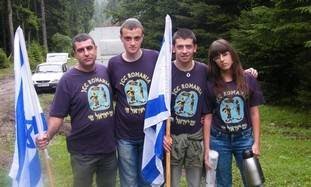
JDC Camp Provides Aid at Crash Site in Romania

After hearing about the tragic crash of a helicopter that killed six Israeli military personnel and one Romanian, staff members and campers at a nearby JDC summer camp in Romania responded with aid for the rescue and recovery teams.  The Jerusalem Post ran a feature and interviewed JDC staff in Romania about their efforts.   

Photo by Yaakov Katz

Check out the article, JDC camp in Romania aids rescue and recovery crews. 

July 6, 2010

JDC: G20 SPOTLIGHT ON THE NEEDS OF THE WORLD'S POOR ESSENTIAL

NEW YORK, NY, June 29, 2010 – Following the G20 Summit in Toronto earlier this week, Steven Schwager, the CEO of American Jewish Joint Distribution Committee (JDC), said that solving the challenges that face the world’s poor is an essential element for global economic recovery.

“As the largest provider of welfare services to poverty stricken Jews in the world, we have observed first-hand the devastating effects that the global financial crisis has had on our clients who today face growing hunger, sickness, and unemployment,” said Schwager. “It is incumbent upon us all, especially in an age of interconnected economies and communities, to create innovative solutions to ease the burden of those who face this kind of hopelessness.”

JDC’s global humanitarian assistance program includes the distribution of food, clothing, medicine, and basic needs to poor Jews and others in more than 70 countries. JDC has also pioneered a number of job training, micro-loan, and financial support programs that have been implemented in places like Argentina, Israel, and nations throughout South Asia. JDC has created and implemented these programs to address the needs of people facing sudden poverty during economic crises; vulnerable populations with high rates of unemployment or non-employment; or those who have lost their livelihoods in the wake of natural and manmade disasters.