Showing posts with label JDC Mission. Show all posts

October 22, 2013

JDC Supporters Join Together To Create Impact Network

Several years ago, Jon Deaner traveled to Argentina on a UJA-Federation of New York-led mission with other young professionals to learn about Jewish life and tradition. Among the most moving experiences he had was his visit to a JDC day care program called Baby Help where he met young children living in poverty.

Jon Deaner poses for a photo with children in Argentina.
A photographer, Jon captured his visit in beautiful pictures. But as his initial connections to the children faded with the passage of time, it was that tangible feeling of being involved and making a difference Jon sought to replicate in a brand-new initiative at JDC. 

At about the same time, Doron Goldstein -- the son of JDC Board Member Yoine Goldstein and one of the founders of Entwine, JDC’s young Jewish leadership platform -- was looking to transition from Entwine but remain actively involved with JDC.

Doron grew up traveling all over the world, meeting Jewish leaders from different communities and witnessing firsthand the lifesaving work of JDC.  He understood the only way to be an instrumental player in JDC’s work was to engage head-on with program directors and content. 

Together, Jon and Doron founded the first donor group under JDC Ambassadors. At a membership level of $2,500, the Impact Network model provides access to JDC Ambassadors events and engagement. Group members focus on a particular issue under JDC’s purview and then commit to raising funds for a project they believe in.

All of this comes as no surprise in 2013. Jewish philanthropy research shows new donors are excited to be involved in charitable causes. Many serve on non-profit boards, encourage friends to give and donate online; and once they are hooked, they want to go “all in.” 

“They want to develop close relationships with the organizations or causes they support; they want to listen and offer their own professional or personal talents, all in order to solve problems together with those whom they support,” the research sats. Jon and Doron’s desire to “be information-driven, impact-focused, proactive, and peer-oriented” spoke to all members of the Child Intervention Impact Network.
Under Jon and Doron’s leadership, the group chose to learn about JDC’s involvement in early childhood programming and voted to support JDC’s Baby Help in Argentina. They met over Argentine wine and discussed Argentine history and politics; they learned about Baby Help from the director, Viviana Bendersky; they asked early childhood experts based in New York about the most up-to-date practices. They plan to support Baby Help concretely by purchasing vaccines and meals, raising awareness and communicating new trends in care. The bottom line: They are strategic philanthropists.

Following this idea, other groups have formed using the Impact Network model focusing in an issue of their choice. JDC is looking forward to engaging individuals more directly and giving donors the opportunity to be hands-on involved. To learn more about or join JDC Impact Networks, visit: http://www.jdc.org/impact. 

This blog post features information from pages 11-16 from the report Next Gen Donors: The Future of Jewish Giving.

April 22, 2013

Poland: 70 Years Later

by Rebecca Neuwirth

In the end, it’s Agatha who makes it impossible not to hope.

I’m with a JDC Ambassadors delegation at the 70th anniversary commemoration of the Warsaw Ghetto Uprising. At midnight on April 19, in the light of two flames that rise from menorahs on either side of the famed Ghetto monument, Cantor Yaakov Lemmer sings in Yiddish about small boys who steal outside to sell cigarettes, and of a searing loss of innocence. Next to me, a member of our delegation sings quietly along—she remembers the tune from childhood.
A memorial for children at the 
Jewish cemetery in Warsaw.
Children's Memorial in Warsaw Jewish Cemetary

Loss of innocence is an elegant metaphor for the brutal desperation that drove parents to allow their young boys to risk their lives to bring home crumbs. The story of the Warsaw Ghetto is unendingly heinous. At its height, over 400,000 Jews were imprisioned in 1.3 square miles. Starvation and violence killed some 100,000 in the first year, and the Nazis deported almost 300,000 to mass murder in Treblinka. Cruel selections separated mothers and fathers from their children; sadistic and senseless acts were the rule, with human kindness used as a lure for brutality.

But the commemoration of the Warsaw Ghetto Uprising, unlike other forms of Holocaust remembrance, focuses not on atrocities but on courage.

It draws attention to acts of resistance and stubborn humanity, from the courage of small boys to the sharing of crumbs of food, the caring for orphaned children – embodied by the amazing Janusz Korczak, even the creation of culture that persisted in the Ghetto in the face of inhuman conditions. Above all, it focuses on the final armed resistance waged by a few thousand Jews against the impossibly larger, full force of the Nazis, and that ended one month later in total destruction and with only 13 Jews remaining.

February 19, 2013

Jewish Renewal in Kazakhstan

Hesed Center with young Kazakh Jews.
by Dov Ben-Shimon

"Yulia" -- dressed in orange
I've just spent the last week in Turkey and Kazakhstan on a JDC Strategic Partnerships/Ambassadors Circle mission and wanted to share something that made a deep impression on me.

At dinner the other night in Almaty, Kazakhstan, I sat with two young leaders of the Jewish community. Michael  and his wife Yelena are very involved with the Almaty community. He is a building contractor and she is a graphic designer. They're both in their early forties and they both volunteer in the Hesed, our federation-supported welfare center. In Almaty the Hesed also functions as a JCC, and they sit on the Board.

Here's the story: Michael grew up knowing he was Jewish. It wasn't a particularly significant part of his life. His mother actually listed their nationality as "Ukrainian" rather than "Jewish" on their internal Soviet passports. She had lived through nasty anti-Semitic attacks in Ukraine before the family moved to Kazakhstan, which has a low level of anti-Semitism. When Michael and Yelena married, religion wasn't really an important topic for either of them, and in a country in which there are high levels of intermarriage, he thought nothing of marrying a nice non-Jewish girl like Yelena.

December 4, 2012

What is our Global Jewish Responsibility?


Peter J. RubinsteinRemarks by Rabbi Peter J. Rubinstein, Senior Rabbi, Central Synagogue
Delivered at the JDC Ambassadors Global Symposium
December 3, 2012

It is a tremendous honor to be with you this morning and a special joy to personally salute you who are involved in and support the JDC.  In my mind you are responsible for and further the work of one of the great heroic organizations of Jewish life. To say this is not hyperbole because I have seen your work in action around much of this world.

Perhaps the most personally stunning and surprising experience I had with JDC was when in the late 1990’s I travelled with a small group of Jewish leaders to visit an Albanian refugee camp during the height of the Kosovo conflict and then to take some of those refugees with us to Israel. In those days brutalized refugees were flowing across the border seeking food and water and shelter and refuge.

I’m not sure what I expected when I arrived in Albania but a tent with a JDC sign outside was nowhere on my screen of possibilities. It was there and then that I came to understand the expansive theater of JDC operations which combat the results of human warfare and misery and are on the ground in the face of the most horrendous natural disasters as in Haiti after the earthquake. I comprehend the exquisite purity of an organization which has as its focus saving people in extremis no matter what their national origin, race, religion or gender. For that I salute and thank you.

The topic you have asked me to address is “What is our Global Jewish Responsibility?” In forming this question I suspect the planners of this symposium were purposeful in framing the question with inherent ambiguity for in fact this topic properly raises two very separate issues.

October 15, 2012

Argentina Expedition, RESCHEDULED for 2013

JDC Ambassadors Argentina Expedition
NOW RESCHEDULED -- March 10-13, 2013


Home to Latin America’s largest Jewish population, Argentina has been a prosperous country for much of its history. The country and its Jewish community were catapulted into economic turmoil during the 2001 economic crisis and resulting devaluation of the Argentine peso. Middle class families in particular bore the brunt of the collapse, and many Jewish families found themselves turned into “the new poor” virtually overnight.

This visit will offer an unprecedented opportunity to meet an important Jewish community in recovery. JDC’s work has focused on helping the most vulnerable Jews in Argentina and supporting the community’s ability to rebuild itself in a sustainable way. Throughout the trip, we’ll meet the wonderful people who are working with JDC to help children and elderly and to ensure the vibrancy of Jewish life and community.

We’ll also see the sites of Argentina, enjoy an evening of tango, and get the inside story of a world-class city that has undergone more than its share of instability in recent decades.

For more information and costs, contact Rebecca at rebeccan@jdcny.org or (212) 885-0878

JDC Ambassadors travel opportunities allow you to see the inside story of how Jews and others live in key cities around the world. Travel is open to JDC Ambassadors, members of our Ambassador Circle and Society, and select guests.

June 25, 2012

JDC Israel Focuses on Empowerment

By Rebecca Neuwirth, Director, JDC Ambassadors

A huge moon is hanging over my shoulder in Tel Aviv, a city I haven't been to since I became a mother over seven years ago and put a brake on long travel.

A lot has changed in that time, but not the tender breeze, the slightly sweet smell of blossoming summer in a dusty city. The smell of cats too - in every small street I sense them - on steps and mailboxes and sliding between parked cars. The simple cafes, the handsome people, the certain knowledge that the ocean is just hidden beyond these small streets, win me over again.

I'm here with 70 people for the JDC Board mission. We are visiting projects that address serious social issues in Israel. I'm excited to see that JDC is hitting all the right notes.

June 12, 2012

Letter to friends: visiting Israel with JDC


Judah Kraushaar, member of the JDC Ambassadors Steering Committee, joined JDC's Board for a mission in Israel in early June 2012. Below are reflections that he shared with a group of his friends about the work and impact of JDC in Israel.

Friends,
I recently had the good fortune to travel with the board of The American Jewish Joint Distribution Committee (JDC) examining in depth its work in Israel. As you may know, the JDC has become one of my passions, and I hope you’ll allow me to share a small part of what I saw and learned from this incredibly stimulating experience. I’ve been to Israel many times typically as a tourist or in the context of my interest in political advocacy; but this trip allowed me to see a very different side of the country—it focused on the challenges posed by the soft underbelly of society, a world where the poor, disenfranchised, and even migrant populations struggle daily. In many countries, such a focus would have been totally depressing; but, as you might have guessed, the commitment in Israeli society to address social problems, combined with Israeli innovation and passion—and helped along by the JDC’s work—made this visit to Israel one of my most uplifting ever.

June 6, 2012

A Final Column from JDC CEO, Steve Schwager


Since March 8, 2005, I have been sending you a weekly column describing in detail some of the many programs and issues facing JDC as it navigates within a turbulent world – always trying to ensure that the needs of Jewish, as well as non-Jewish, men, women, and children are met across the globe.

I have written 331 columns; since I will be traveling over the next few weeks, this will be my last column, and I thought it would be meaningful to highlight some of JDC's achievements during my 23-year tenure. The programs described below are in no particular order, but simply came to mind in a stream of consciousness process as I began writing this piece.

May 23, 2012

Traveling to Kiev with JDC


Kiev is a vast city of nearly 3 million. JDC's work feeds impoverished Holocaust survivors and other elderly, and helps families in need. It is also about building a caring community, and we felt an integral part of one during our visit.

by Rebecca Neuwirth, Director, JDC Ambassadors

Before leaving for Kiev, someone told me that the city was beautiful, all orthodox churches and Dostoyevsky. And in JDC reports, I read about the immense poverty and dire living conditions of families with troubled children and the elderly.

Not surprisingly, on the first day of our staff mission in Kiev, it seems all of this is true. A city of contradictions, a vast city, vital, sad, moving, with a future that is very uncertain.

April 26, 2012

Once Again, JDC Received Charity Navigator 4-Star Rating


From:  Penny Blumenstein, President
           Steve Schwager, CEO

Re:  Charity Navigator Rating

Date:  April 25, 2012

We have just been informed by Charity Navigator that we have once again been awarded a 4-star rating, which is the highest rating possible.

Charity Navigator is America’s premier charity evaluator.  They highlight the work of efficient charities and provide donors with essential information needed to give them greater confidence in the charitable choices they make.

Ken Berger, President and CEO, wrote the following about JDC:  “Receiving four out of a possible four stars indicates that your organization adheres to good governance and other best practices that minimize the chance of unethical activities and consistently executes its mission in a fiscally responsible way.  Only 15% of the charities we rate have received at least 2 consecutive 4-star evaluations, indicating that American Jewish Joint Distribution Committee outperforms most other charities in America.”

We know you share our pride in their faith not simply in what we do, but also how we do it.  


April 6, 2012

Chag Sameach


Today, as we have for nearly a century, JDC is ensuring that tens of thousands of Jews around the world can celebrate this Passover thanks to your generous support.

Wishing you and your family a wonderful Pesach.

You can send your own customized JDC Pesach greetings.  If you would like to send your own JDC e-card, please visit www.jdc.org/ecards.

August 31, 2011

Happy Birthday JDC!!!

Today JDC celebrates 97 years of rescue, relief and renewal of Jewish communities in Israel and around the world. 


On August 31, 1914, Henry Morgenthau Sr., then U.S. ambassador to Turkey, cabled New York philanthropist Jacob Schiff, asking for $50,000 to help sustain the Jews of Ottoman Palestine, who were cut off from their normal sources of support by the outbreak of World War I. The money was raised within a month and led to the founding of the Joint Distribution Committee of American Funds for the Relief ...of Jewish War Sufferers. It became known as the American Jewish Joint Distribution Committee or more popularly as the “Joint” or JDC.

For 97 years, JDC has exemplified globally the principle that all Jewish people are responsible for one another.  Active today in more than 70 countries, JDC and its partners work to rescue Jewish lives at risk, bring relief to Jews in need, renew lost bonds to Jewish identity and Jewish culture, and help Israel overcome the social challenges of its most vulnerable citizens, both Jewish and non-Jewish. JDC reach extends beyond the global Jewish community by providing non-sectarian disaster relief and long-term development assistance worldwide.

July 21, 2011

In Blessed Memory: Myra Kraft, z"l


To:       JDC Board of Directors
From:   Irv Smokler, President
            Steve Schwager, CEO
Re:       A Loss in the JDC Family
Date:    July 20, 2011


It is with sadness and a deep sense of loss that we share the news that JDC Board member Myra Hiatt Kraft passed away early this morning after a long battle with cancer. She was 68 years old.

Myra came onto the Board in 1994.  She chaired JDC’s Rescue Committee from December 2002 through December 2007.  Then she focused on needs in the country that she loved:  Israel.  She was the Vice Chair of the Israel Committee from January through December 2007 and then stepped up as Chair of the Committee from December 2007 through December 2010.

But as most of you know, JDC was just one piece of Myra’s remarkable world of caring and philanthropy, a world she embraced even as a young girl.  She inherited her passion for philanthropy from her late father, Jacob Hiatt, who escaped the rise of Nazism when he emigrated from Lithuania in the mid-1930’s.

Aside from JDC, she supported a myriad number of foundations, organizations, charities, and programs – always with a simple philosophy that she described in the following way:  “I’m not looking for earth-shattering ideas, but good programs that you know whatever you give them is going to be used well and that it’s needed.”

Barry Shrage, in his announcement of her death to the Boston Federation, commented that “her acts of gimilat chasadim (individual, anonymous, personal acts of loving kindness) were an essential part of who she was as a person.  No one in need was turned away.”

Both the Jewish and secular global families have lost a remarkable and loving friend and benefactor.  We extend our heartfelt condolences to Myra’s beloved husband, Bob, to her four sons – Jonathan, Daniel, Josh, and David – and to her eight grandchildren.  May her memory be for a blessing; we will remember her always and know without a doubt that the world is surely a better place because of her.

January 12, 2011

Looking Back...

During 2010, in more than 70 countries, JDC was there saving lives, alleviating hardship, and rebuilding families and communities.

Visit our special page highlighting JDC in 2010 and go on a virtual tour with our new photo exhibit about our efforts throughout the past year. 

Click on the photo for link

On behalf of the more than 2 million people
impacted by our work each year, we thank you.

November 5, 2010

2009 JDC Annual Report with 2010 Highlights


Our 2009 Annual Report is now available on-line. 

When an elderly woman in Ukraine needs food…

When an Israeli father struggles to support his family…

When a Jewish community in Uruguay seeks strong leaders…

Read these and other stories of how JDC, the world’s leading Jewish humanitarian assistance organization, is there, impacting lives and rebuilding Jewish life around the globe.

September 1, 2010

HAPPY ANNIVERSARY JDC!!! HAPPY BIRTHDAY RALPH GOLDMAN!!

96 years +1 day ago, on August 31, 1914, Henry Morgenthau Sr., then U.S. ambassador to Turkey, sent an urgent cable to New York philanthropist Jacob Schiff, asking for $50,000 to help the Jews of Palestine (then under Ottoman Turkish rule), who were cut off from their normal sources of support by the outbreak of World War I. Within a month the money was raised and from that beginning, JDC was founded.

And 96 years ago today, Ralph I. Goldman was born in Ukraine. 

So, how are these two things connected?  

Ralph Goldman has been the very soul of JDC, helping to shape the organization into what it is today.  He served as Executive Vice President from 1976 – 1985 and from 1986 – 1988 and as Honorary Executive Vice President since 1988. 

Ralph has dedicated his life's work to Jewish communal service.  He has been a moving force in the establishment of many innovative social, educational, and cultural programs enriching life in Israel and throughout the Jewish world.  With JDC he was the driving force for our return to the Former Soviet Union and Eastern Europe and in establishing our critical role in Israel.   

Learn about the role of JDC throughout the past 96 years at JDC Throughout the Years.   

And you can see some favorite photos of Ralph throughout the years at JDC: In Service. 

Ralph and past Ralph I. Goldman Fellows, June 2010

July 29, 2010

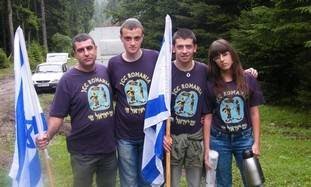
JDC Camp Provides Aid at Crash Site in Romania

After hearing about the tragic crash of a helicopter that killed six Israeli military personnel and one Romanian, staff members and campers at a nearby JDC summer camp in Romania responded with aid for the rescue and recovery teams.  The Jerusalem Post ran a feature and interviewed JDC staff in Romania about their efforts.   

Photo by Yaakov Katz

Check out the article, JDC camp in Romania aids rescue and recovery crews. 

July 6, 2010

JDC: G20 SPOTLIGHT ON THE NEEDS OF THE WORLD'S POOR ESSENTIAL

NEW YORK, NY, June 29, 2010 – Following the G20 Summit in Toronto earlier this week, Steven Schwager, the CEO of American Jewish Joint Distribution Committee (JDC), said that solving the challenges that face the world’s poor is an essential element for global economic recovery.

“As the largest provider of welfare services to poverty stricken Jews in the world, we have observed first-hand the devastating effects that the global financial crisis has had on our clients who today face growing hunger, sickness, and unemployment,” said Schwager. “It is incumbent upon us all, especially in an age of interconnected economies and communities, to create innovative solutions to ease the burden of those who face this kind of hopelessness.”

JDC’s global humanitarian assistance program includes the distribution of food, clothing, medicine, and basic needs to poor Jews and others in more than 70 countries. JDC has also pioneered a number of job training, micro-loan, and financial support programs that have been implemented in places like Argentina, Israel, and nations throughout South Asia. JDC has created and implemented these programs to address the needs of people facing sudden poverty during economic crises; vulnerable populations with high rates of unemployment or non-employment; or those who have lost their livelihoods in the wake of natural and manmade disasters.

March 26, 2010

Free Expression

You can purchase your own copy of the In Every Generation: The JDC Haggadah by clicking on this LINK

Free Expression
From The Jerusalem Post 
By Abigail Klein
March 26, 2010 - Jerusalem Post

‘The JDC Haggadah’ aims to bring the text out of the historical realm and into the present.

Illustrating the Pessah Haggada has always required a stretch of the imagination. Lacking photographic evidence of the Exodus from Egypt, or the mishnaic personalities whose words enhance the text, artists through the ages have found myriad media to help the reader visualize the epic story.

In Every Generation: The JDC Haggadah matches photos from the archives of the the American Jewish Joint Distribution Committee, a 96-year-old worldwide rescue and relief organization, to the traditional text, theme for theme.

The spread devoted to the Seder’s first hand-washing, urhatz, shows a child washing his face at a JDC-supported kindergarten in Teheran in 1946; a young man in the Soviet Union ritually washing his hands before a meal at Agro-Joint Colony 36 in 1929; a boy at the sink of a Norwegian sanatorium for families brought from Germany by the JDC in 1952; morning cleanup at a Jewish summer camp in Hungary in 1935; a soaped-up young North African émigré assisted by the JDC in France in 1959; campers washing up at a program for Jewish youngsters from Algeria in 1963; and a woman getting water from a JDC-sponsored tap in Ethiopia in 1988.

This particular spread is among the favorites of Columbia University Graduate School of Journalism professor Ari L. Goldman. With aid from his research assistant, Rebekah Costin, Goldman blended JDC photographs and other archival material with the Haggada text, and added commentary explaining the links between the ancient narrative and stories of modern rescue and relief.

“We were wondering how to illustrate urhatz, because although there are lots of water metaphors at the Seder – the salt water on the table, infant boys being thrown into the Nile, the plague of water turning into blood, the splitting of the sea, the miracle of Miriam’s well – what does that have to do with the JDC?” said Goldman. “Then we came upon this treasure trove of images showing children washing and bathing in places where there wouldn’t have been hygiene facilities if not for the JDC. We actually had too many pictures. You might say we were flooded with them.”

The water-themed collection included many images of adults, not all of them Jewish. Although he chose ultimately to use only photos of children, Goldman mentions the context of one of the unseen pictures in his commentary: “When the 2004 tsunami in the Indian Ocean caused death and destruction in 11 countries, JDC raised over $19 million for relief and rehabilitation efforts, and getting fresh drinking water to survivors was part of its initial emergency aid.”

During his 20-year career at The New York Times, Goldman had covered this and other more recent relief programs depicted in the Haggada. Jewish Book Council director Carolyn Starman Hessel, on behalf of the JDC, therefore thought he’d be the ideal commentator for the project. She also tapped Rabbi Joseph Telushkin to write the foreword, which includes a JDC-centric rendition of “Dayenu” (“If the JDC had only supported 58,000 orphaned Jewish children in Eastern Europe and Palestine after World War I, dayenu, it would have been enough...”).

“As a serious practicing Jew, I continually struggle with making my Judaism relevant to myself, my students and my children,” said Goldman, who lives in Manhattan with his wife, Shira Dicker, and their three children. “How do you make old stories and rituals become alive and contemporary?”

In this book project, he endeavored to “take the Exodus out of the realm of history or myth and make it very concrete by showing how it is not just history but part of our contemporary life. This idea of the rescue of Jews, of taking people out of bondage and terrible circumstances and giving them new life and freedom and hope, is a timeless story.”

Goldman joked that, in preparing his manuscript, he did not feel a need to research the Seder itself; at 60, he’s been to 120 of them. But he did read up on the JDC, the world’s largest Jewish humanitarian assistance organization, to convey a sense of the breadth of its work since 1914.

“JDC was founded very much in the spirit of the Exodus story,” he writes in the introduction. “Its founding mission was to free modern-day Jewish slaves. These slaves weren’t building pyramids in Egypt, but were enslaved by poverty, ignorance, injustice, dislocation and discrimination.”

“The international scope of the rescue and relief efforts really struck me,” he said. “There were pictures from Cuba, Hungary, Norway and Shanghai; Ethiopia, Yemen and Italy; the Dominican Republic, Vienna and Iran. What a rich and diverse community we are, reaching across borders to help one another.”

One of the most poignant sections of the book includes photographs and excerpted first-person accounts regarding JDC’s work in various times and places to supply Jewish communities with the crucial Pessah staple, matza. There is, for example, the story of Clara, a Soviet senior citizen, who showed JDC program director Asher Ostrin the carefully wrapped piece of matza she kept in her communal kitchen’s cubby. She explained that she no longer knew when Pessah was, but one week each spring she would unwrap that stale matza and leave it on her table to remind her of the holiday. Upon receiving a fresh kilogram of the unleavened bread from Ostrin, she said, “And now, you angels from the Joint have come and brought me something I could never have dreamed of. I can be part of my people once again.”

Goldman is partial to a spread showing rabbinic envoys readying a shipment of Torah scrolls for World War II refugees resulting from a JDC campaign encouraging every American synagogue to donate a Torah to replace those destroyed by the Nazis. “Across the page, there is a picture of a girl [in postwar Berlin] getting shoes, and another of [Jewish children in 1921 Palestine] waiting for food. This shows that both physical and spiritual needs were being addressed by the JDC. It also points up the stark difference between American prosperity and European deprivation during that time.”

Goldman said he feels In Every Generation is appropriate for Seder participants on all points of the Jewish spectrum. “It sheds new light on a story that people either don’t know or think they already know,” he said, suggesting that few people are aware, for example, that the Dominican Republic issued 1,000 visas for European Jews during the war to come to the island nation and set up an agricultural community. Such information, Goldman said, “provides another way of looking at yetzi’at mitzrayim and gives the reader the opportunity to bring something new to the Seder beyond Moses and the 10 plagues.”

November 20, 2009

Guess Who Did Not Come to the Party?

From the Jerusalem Post
Nov. 16, 2009


OP-ED BY STEVEN SCHWAGER  

Symbolism, rather than action, dominated the General Assembly (GA) of the Jewish Federations of North America. Its new logo, new name and new executive and lay leader were a sure sign of hope, the harbingers of a sincere and enthusiastic attempt to revive the national organization that succeeds UJC. Yes, the GA was a magnificent celebration of Israeli-American Jewish unity and a demonstration of its might. But I returned from Washington more concerned than I have ever been in my 20 years of Jewish communal service.

On one hand, we at JDC will support the newly-created JFNA. On the other hand, we are worried about those who were not "present at the party" during the GA. I refer to the other Jews - those who do not live in Israel or North America. Their voices were silent, their needs received a cursory notice and their communities were ignored. I am not trying to be a party spoiler, but 20 percent - one fifth! -of the Jewish people today live outside of the US and Israel.

We know them well: For us they are not statistics, but rather Jewish men, women and children who are struggling to live Jewish lives in their historic communities. JDC is often their only guardian, their daily lifeline, their friend and support. We help them in Mumbai and in Buenos Aires, in Warsaw and Riga, in Djerba and Bucharest.

The elderly Jews in the former Soviet Union today are the poorest Jews in the world, and their situation is painfully serious. We struggle to feed them, to keep them warm, to supply their vital medicines - paid for in part by declining American Jewish charitable funds.

Regretfully, helping the elderly is stigmatized in the eyes of most affluent Russian Jews. The paradox is that those oligarchs went from rags to riches during the chaotic post-communist years. And those very same years turned their elderly parents' generation into penniless poor. But the oligarchs prefer to put their money and their names on mausoleums and universities.

In the excitement to trump new "Jewish peoplehood," there is the risk that we are abandoning the Jewish people. And that leads to the greatest irony: The Jewish "babushka" living alone in a one-room walkup in Russia is helped today by the generosity of millions of Evangelical Christians through the International Fellowship of Christians and Jews - not by the charity of an oligarch who could be her grandson!

What else worries us? The UJA - the grandfather of today's newly-created JFNA - was formed in the wake of Kristallnacht in Germany, precisely 71 years ago. Numerous speakers at the GA last week made references to this historic event that catapulted American Jewish philanthropy into a superpower world arm, bringing rescue and relief to every Jew. UJA was always a relentless and indefatigable advocate of Jewish needs in Israel and overseas. Seventy-one years later, will we abdicate this moral commitment under the pressure of domestic issues and needs? Can we - the more comfortable, more secure 80% of the Jewish people - cut off the neediest 20% of our brethren? Since when has a hungry Jew anywhere become an "overseas issue" marked as less urgent compared to local needs?

We are a worldwide Jewish family - and family takes care of its own. As we enter the new era of our communal life in North America, let us harness all our moral, communal and, yes, financial resources to guarantee that our philanthropy will never forsake any Jew in need of life's basic necessities.

The writer is the executive vice president and CEO of the American Jewish Joint Distribution Committee.

This article can also be read at http://www.jpost.com%20/servlet/Satellitecid=1258027305097&pagename=JPArticle%2FShowFull